Security Built for High-Density Living: MOM-Compliant, Operationally Proven
MOM-compliant security for Singapore worker dormitories and co-living properties: biometric access, high-density surveillance, and attendance tracking.
Securing worker dormitories and managed residences across Singapore since .
In Short
What Managed Living Security Actually Needs to Do
Managed living security is about maintaining visibility, accountability, and operational control across high-density residential environments. Whether managing a worker dormitory, co-living property, or managed hostel, operators need to know who is on-site, control access efficiently, maintain accurate records, and support regulatory requirements: all without increasing the manual workload on operations staff.
The objective is not simply controlling entry. The objective is managing people movement at scale while producing the compliance records that MOM inspections, internal audits, and incident investigations require. Once a site reaches a certain population size, the problem is no longer collecting information. The problem is finding it quickly and accurately when you need it.
Managing Hundreds of Residents Across a Single Site Is Not a Standard Security Brief
High occupancy, shift-based movement, MOM audit obligations, and duty-of-care responsibilities make managed living one of the most demanding environments to secure correctly.
MOM Compliance Is Non-Negotiable
Worker dormitories in Singapore operate under the Foreign Employee Dormitories Act. Operators must maintain accurate attendance records, control entry and exit at all times, and produce documentation on demand. A system that cannot generate audit-ready reports is a liability, not just an inconvenience.
Thousands of Daily Movements to Track
A single dormitory can house 2,000 to 10,000 residents moving in and out across multiple shifts. Manual sign-in sheets and guard checkpoints cannot scale. Most operators discover the limits of manual processes only when they need to account for thousands of resident movements across multiple shifts: and find the records incomplete or impossible to retrieve quickly.
Co-living Operators Face a Different Set of Pressures
Co-living properties serve a transient, mixed-nationality population with high turnover. Access credentials must be issued and revoked quickly, shared spaces need monitoring without intruding on residents' privacy, and building owners need visibility across multiple units without constant on-site presence.
Which Best Describes Your Property?
Dormitories, co-living developments, and managed hostels each have distinct regulatory and operational profiles: we have engineered for all of them.
Worker Dormitories
MOM-licensed facilities housing foreign workers. The priority is compliance: biometric attendance, perimeter control, documented incident response, and audit trail generation. We have deployed across multiple large-scale dormitories in Singapore.
Co-living Apartments
Purpose-built or converted residential properties with shared amenities, high resident turnover, and remote management requirements. The priority is frictionless access for residents and real-time visibility for operators who may not be on site.
Managed Hostels
Short-stay and transitional accommodation with frequent check-in and check-out cycles. The priority is front desk integration, visitor control at common areas, and after-hours perimeter monitoring.
What Goes Into a Managed Living Security System
Dormitories and co-living facilities share a common operational challenge: high-density occupancy, high resident turnover, and the need for compliance records generated automatically without manual overhead. These are the systems we deploy.
CCTV & Surveillance
Camera coverage in managed living environments spans perimeter fencing, building entrances and exits, common areas, corridors, laundry and recreation facilities, and car parks. AI analytics detect crowd formation, loitering, and after-hours activity automatically: reducing the guard headcount needed across a large site. Cameras also deter and document disputes and altercations in common areas, providing evidential footage when incidents need to be escalated to management or authorities.
Access Control & Turnstiles
Biometric turnstiles are the foundation of dormitory access management and MOM compliance. Fingerprint or facial recognition at entry points generates the timestamped records operators need for attendance reporting and headcount verification. For co-living properties, card or mobile-based access allows rapid credential management for high-turnover resident populations. Lift access control and facility room access extend the same credential system across the entire site.
Video Intercom
Video intercom at main entrance lobbies and common area access points allows residents to admit authorised guests without compromising building security. For co-living properties, intercom enables front-of-house guest handling: residents can verify and grant access to visitors from their room or phone without requiring a staff member to be physically present at the door. Guard post intercom connects security stations to the central command point for coordinated response.
IP Telephony
IP phone systems connect management offices, guard posts, reception, and operational hubs across large dormitory and co-living sites into a single communications network. Each post can be assigned a DID number: a direct external line: while remaining part of the central PBX. For dormitory operators with multiple sites, one IP PBX links all facilities with shared directories and call transfer, enabling centralised operations management without separate phone systems at each site.
Network Infrastructure
All the systems above run on IP: and a well-designed network is what makes them reliable at scale. Managed PoE switches handle the volume of cameras, access readers, intercom panels, and IP phones across a high-density site. VLAN segmentation separates resident WiFi from security and management networks on the same physical infrastructure. For large dormitory sites, distributed switching ensures the system remains operational even if one network segment encounters an issue.
Management Platform
A unified platform is not optional for managed living at scale. Operators need attendance records, access event logs, incident documentation, and camera footage accessible from a single dashboard: and exportable for MOM submission or internal review. The platform supports remote access for off-site operators, automated reporting on headcount and access patterns, and alert escalation when credential anomalies or access violations are detected.
How We Approach a Managed Living Security Project
Managed living security requires precise planning around resident movement patterns, compliance obligations, and operational shift schedules: not a standard install-and-leave approach.
Compliance & Operational Review
Before any system design, we review your MOM licence conditions, resident population size, shift patterns, and existing infrastructure. We identify compliance gaps, access bottlenecks, and surveillance blind spots that need to be addressed in the design.
High-Density System Design
We design a system scaled to your resident population: not a generic template. Turnstile placement, camera coverage zones, and access credential architecture are planned around your specific site layout, peak movement windows, and reporting obligations.
Phased Installation with Zero Downtime
Managed living sites cannot be shut down for installation. We work in phases: typically starting with perimeter and entry systems, then common areas: to maintain full site operations throughout. All systems are tested under peak-load conditions before handover.
Compliance Handover & Ongoing Support
We provide full documentation of the installed system for MOM compliance records, train your operations team on attendance reporting and incident logging, and remain available for ongoing maintenance and system updates as your population or licence conditions change.
Common Mistakes We See in Managed Living Security Projects
After working with dormitory operators, co-living providers, and managed accommodation groups, several issues appear repeatedly.
Treating Compliance as a Reporting Problem
Many operators focus on producing reports at audit time. The real challenge is collecting accurate information automatically throughout the year so that reports can be generated instantly rather than compiled manually under time pressure. A system that requires manual data reconciliation before MOM submission is not compliant in any meaningful operational sense: it is producing the right output through the wrong process.
Relying on Manual Processes at Scale
Manual registration, guard sign-in sheets, and paper logbooks work at small scale. They become progressively less reliable as resident populations grow. A dormitory housing 3,000 residents and processing multiple shift changes daily cannot maintain accurate records through manual processes: the error rate alone would make the records unreliable for compliance purposes, quite apart from the operational overhead.
Designing for Entry Control Without Occupancy Tracking
Knowing who entered is important. Knowing who is currently on-site: at any given moment, by block, by zone, and site-wide: is often operationally more important. Emergency mustering, compliance headcounts, and incident response all depend on accurate real-time occupancy. A system that only logs entries and exits without maintaining a live occupancy count requires manual reconciliation every time the question is asked.
Designing Only for Today's Population
Dormitory populations change: sometimes significantly: as labour contracts shift, projects ramp up, and operator capacity is adjusted. A system designed with no capacity for growth forces a partial or full redesign when the population changes. The infrastructure: controller capacity, network switching, biometric terminal throughput, platform licences: should support the site's maximum anticipated population from the outset, not its current occupancy.
A Practitioner Observation
The most common observation we make during a managed living assessment is that the existing system was designed for the site's original population and has never been reviewed as the population grew. The hardware is technically still functioning: but it is processing a volume of daily movements it was never designed for, and the compliance records it produces are incomplete as a result. Reviewing capacity against current population before a MOM inspection is significantly less disruptive than addressing it after one.
Trusted Across Managed Living Properties in Singapore
We have secured worker dormitories housing thousands of residents, with MOM-compliant biometric systems and 24/7 operational continuity.
Full case studies coming soon. WhatsApp us to discuss a comparable project.
Not Sure if Your System Meets MOM Requirements?
We will review your current setup against licence conditions and identify gaps: no obligation, no hard sell.
What Affects the Cost of a Managed Living Security System?
Two sites with the same resident population may require very different solutions depending on layout, entry point count, and compliance obligations.
Resident Population and Throughput
Biometric terminal specification, turnstile count, and lane configuration all scale with resident population and peak throughput requirements. A site processing 500 shift-change entries per hour requires different hardware specification from one processing 3,000 in the same window: even if the total resident count is similar.
Number of Entry Points and Buildings
Each controlled entry point requires its own biometric terminal, access controller, camera, and associated cabling. Multi-block sites with separate entry points per block have proportionally more hardware scope than compact single-block facilities, even at comparable resident counts.
Compliance Reporting Requirements
MOM dormitory licence conditions specify what records must be maintained and in what format. Platform configuration for MOM-exportable reporting, retention policy compliance, and audit documentation requirements adds to the installation scope: and is more straightforward to configure correctly at the outset than to retrofit after the system is commissioned.
Existing Infrastructure
Sites with structured cabling, managed network switches, and functioning conduit can be upgraded at lower cost than sites where the entire network infrastructure needs to be built. We assess existing infrastructure reuse potential during the site survey before any scope is finalised.
CCTV Coverage Scope
High-density CCTV coverage of large dormitory sites: perimeter, blocks, common areas, recreational facilities, car parks: requires a significant camera count and proportional recording and storage infrastructure. The coverage specification is driven by site layout and compliance requirements, not by a default camera-per-unit ratio.
Multi-Site and Remote Management
Operators managing multiple properties benefit from a centralised platform covering all sites: attendance records, camera footage, and access event logs in one dashboard accessible remotely. Multi-site platform configuration adds to the project scope but eliminates the administrative overhead of managing separate systems at each site.
A Practitioner Observation
The most significant variable in managed living project cost: after resident population: is almost always the condition of existing cabling and network infrastructure. Sites where the network has been maintained and documented are substantially faster and cheaper to upgrade than sites where the infrastructure history is unclear. The site assessment establishes this clearly before any scope is agreed, so there are no surprises during installation.
Why Managed Living Operators Choose Securevision
We understand the operational and regulatory pressures of running high-density managed residences in Singapore: and we have built systems that address both.
We Know MOM Compliance from the Inside
We have designed and installed biometric access and attendance systems specifically for MOM-licensed dormitories in Singapore. We understand what documentation operators need, what format MOM inspectors expect, and how to build systems that generate that output automatically: without manual data entry or post-processing.
Built for Volume, Not Just for Show
A turnstile that works for 50 people a day and a turnstile that works for 5,000 are not the same product. We specify equipment rated for high-throughput managed living environments: biometric terminals with sub-second recognition speeds, turnstiles rated for continuous operation, and cameras with the storage capacity to retain footage for MOM-required retention periods.
Remote Visibility for Operators Who Are Not On-Site
Co-living and dormitory operators often manage multiple properties from a central office. Our platform gives you live camera access, access event logs, and attendance reports from a single dashboard: accessible from anywhere. You do not need to be on-site to know what is happening.
Frequently Asked Questions
Questions we hear regularly from dormitory operators and co-living property managers considering a security upgrade.
Does your system generate the attendance records MOM requires for dormitory operators?
Yes. Our biometric turnstile systems generate timestamped entry and exit records for every resident, exportable in formats suitable for MOM submission. We configure the reporting module during installation and train your team on how to run and archive reports on the required schedule.
How quickly can access credentials be issued and revoked for high-turnover residents?
For co-living and hostel operators, credential management speed matters. Our systems support same-day credential issuance via card or mobile, and instant remote revocation: accessible from the management dashboard without needing to be on-site. For biometric systems in dormitories, enrolment takes under 30 seconds per resident.
Can your system handle a large dormitory with multiple entry and exit points?
Yes. We have deployed across dormitory sites with multiple access points serving thousands of residents across different shift schedules. The system architecture handles concurrent access events across all points simultaneously, with all records consolidated in a single platform dashboard.
What happens if the biometric system goes down: can residents still enter?
All our biometric systems include a backup access method: typically card or PIN: so residents are never locked out due to a system fault. The platform also generates alerts when any access point goes offline, so your team can respond before it becomes an operational problem.
We Also Work With
Our engineering experience spans the full range of Singapore's built environment: from factories and warehouses to care facilities and government buildings.
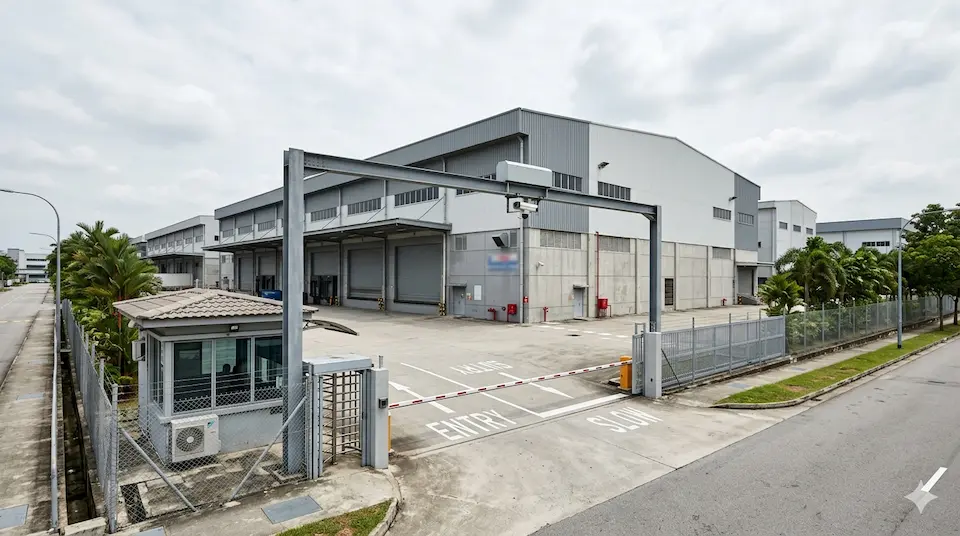
Industrial
Factories, logistics hubs, and tech parks face many of the same perimeter and access challenges as large managed living sites: at similar scale.
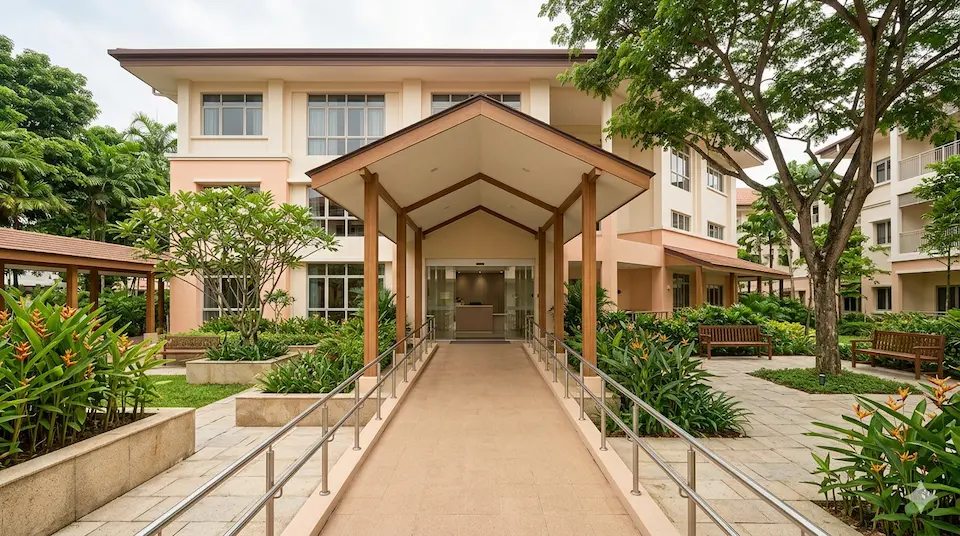
Healthcare
Nursing homes, senior day care centres, and specialist care facilities require security that protects vulnerable residents while supporting care team workflows.
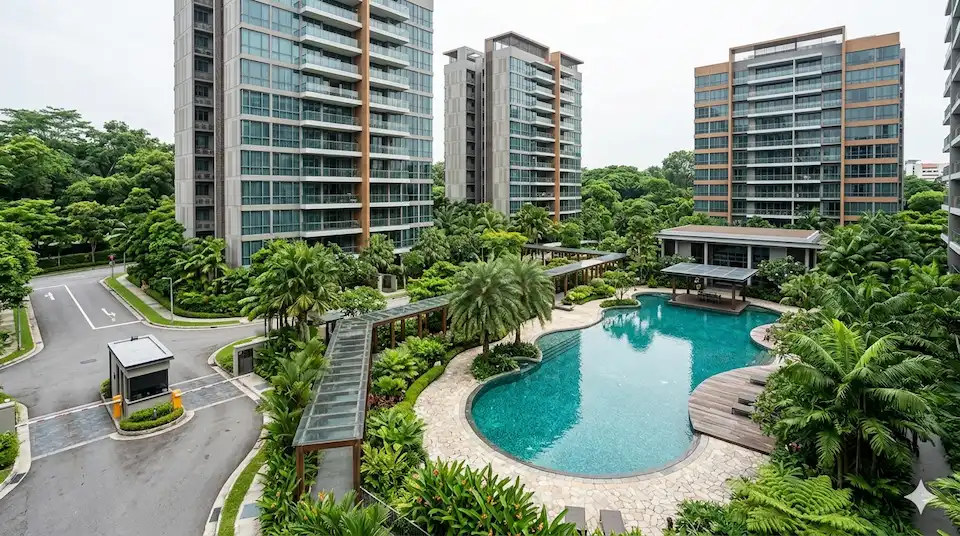
Condominiums
Strata-titled residential estates share the multi-unit access and resident management challenges of co-living properties, with added MCST governance requirements.
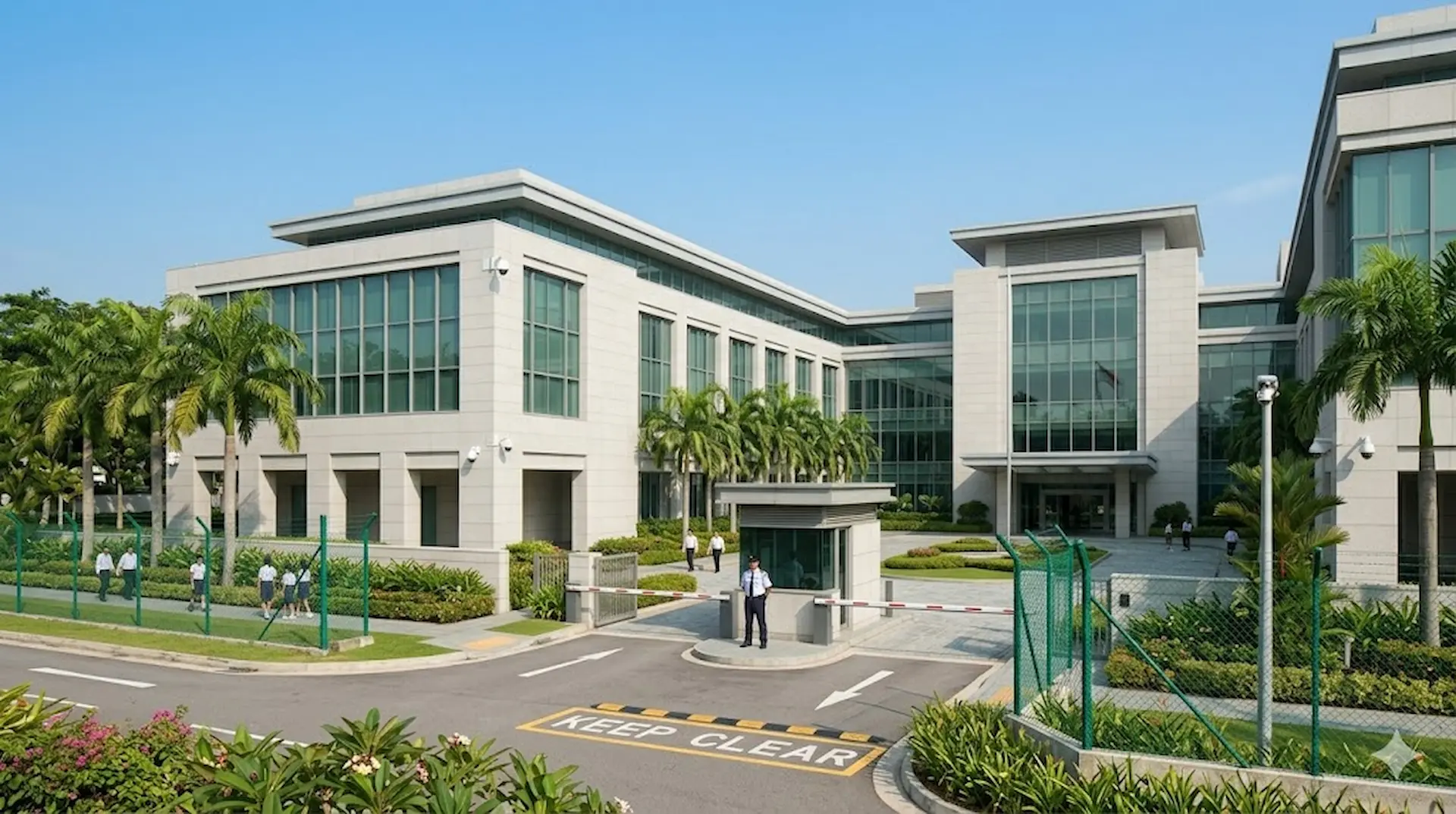
Solving a Specific Problem?
These pages address common managed living operational challenges that integrated security systems directly resolve. Each one goes deeper into the problem, what causes it, and how it is typically solved across Singapore sites.
Reduce security manpower costs without compromising resident safety →
Improve visitor management across a high-turnover resident population →
Ready to Secure Your Managed Living Property?
Tell us about your site. We will assess your resident population, compliance requirements, and entry point configuration: and design a system built for your operational scale.
Licensed by the Police Force: Licence · Serving Singapore since 2006