Security Systems Designed for MCSTs, Managing Agents & Guard Teams
Integrated solutions that improve estate security, reduce manpower pressure, and create a smoother living experience for residents.
Serving condominiums and MCSTs across Singapore since .
In Short
What Condominium Security Actually Needs to Do
Condominium security today is about balancing resident convenience, operational efficiency, and estate accountability. Most estates need CCTV, intercom, access control, vehicle management, and a resident platform working together: not as separate systems that create additional work for guards and management teams every time they need to cross-reference an incident.
The challenge is rarely selecting the right hardware. The challenge is reducing manual work, improving visibility, and supporting the way residents, visitors, contractors, and guard teams actually interact with the estate every day. A system that gets in the way of daily life will be worked around. A system that is worked around is not providing security.
The Reality of Managing a Condominium Today
Condominium security is no longer just about guarding boundaries. It is a complex operational challenge involving rising manpower costs, growing resident expectations for convenience, and the need for clear accountability. Fragments of legacy hardware often create blind spots that increase friction for residents and workload for guard teams.
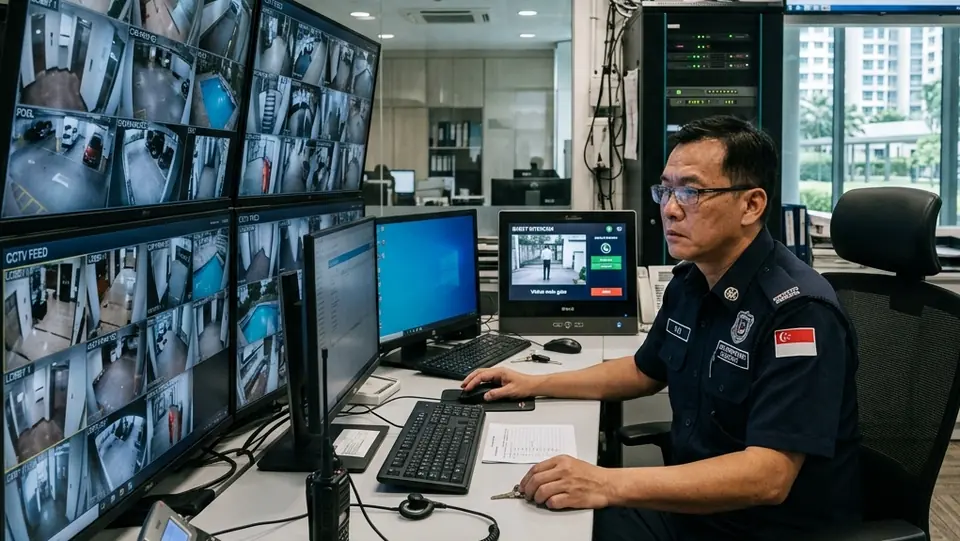
Fragmented systems create blind spots
When intercoms, CCTV, and vehicle gantries do not communicate with each other, guards are forced into manual workarounds. Integration is the only way to ensure full visibility across the estate and reduce the reliance on individual guard judgement for routine decisions.
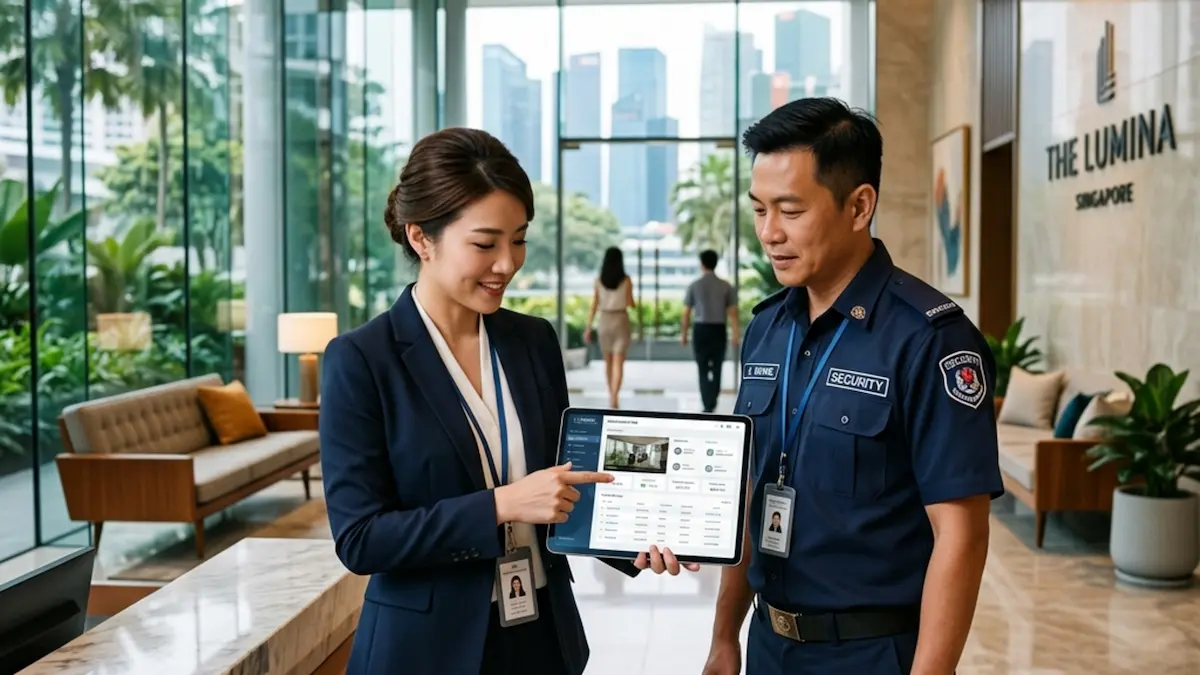
Estate operations must stay smooth
Security should not be a bottleneck. From seamless visitor entry to rapid incident review, your systems must support the daily flow of the estate: reducing complaints, improving response times, and giving management the visibility they need when something goes wrong.
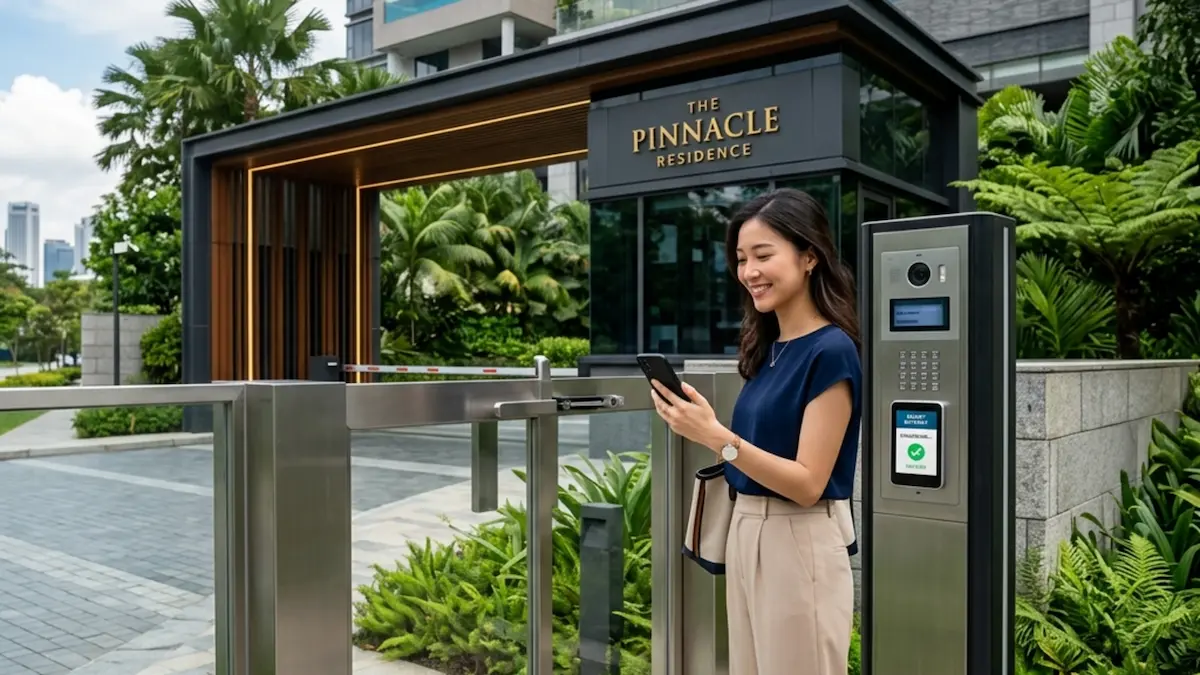
Security must support daily living
A modern estate should feel open to residents and controlled for everyone else. We design systems that give residents mobile access and convenience while maintaining the audit trails that MCST councils require for governance and dispute resolution.
Proven Across Major Residential Estates in Singapore
Securevision has spent over two decades working on security infrastructure for Singapore's condominium estates. Our work is defined by the ability to upgrade occupied estates without interrupting resident life: supporting MCST councils, managing agents, and guard teams with reliable, evidence-grade visibility.
Intercom Modernisation
Retrofitting IP video intercoms into legacy complexes to enable mobile resident calling, visitor authorisation from the resident app, and improved call quality across all units.
Infrastructure Continuity
Managing the transition of hundreds of units to digital and 2-wire platforms with no downtime for estate security: phased block by block to maintain coverage throughout.
Certified Implementation
Police Licensed and compliant for the highest standard of on-site delivery across occupied residential estates.
Designed for Every Stakeholder in the Estate
MCST Councils
We help councils reduce resident complaints and manage budgets effectively through long-term infrastructure planning. Our systems focus on durability, accountability, and clear audit trails that councils can rely on for governance and incident resolution.
Managing Agents
Remove the friction of vendor coordination. We provide a single point of responsibility for all security systems, ensuring high uptime and rapid response so managing agents can focus on broader estate operations.
Guard Teams
Reduce workload through automation. From LPR-driven vehicle entry to IP intercom visitor verification, we eliminate manual bottlenecks and give guards better visibility of incidents across the entire development.
Common Mistakes We See in Condominium Security Projects
After working with condominium estates across Singapore for over two decades, several issues appear repeatedly.
Replacing Hardware Before Reviewing Workflow
Many estates focus on replacing intercoms, barriers, or cameras before understanding why the existing process is failing. In most cases the hardware is not the problem: the workflow behind it is. An intercom that residents do not answer, a barrier that guards override manually, a CCTV system that nobody checks: these are process problems. Replacing the equipment without fixing the process reproduces the same failure in newer hardware.
Treating Security Systems as Separate Purchases
Intercom, CCTV, access control, visitor management, and LPR are often purchased at different times from different suppliers. The result is multiple systems that do not communicate with one another. When an incident occurs, the guard cannot correlate the access log with the camera footage because the systems share no common reference point. Integration is most cost-effective when designed from the outset: retrofitting it later is significantly more expensive.
Leaving Resident Communication Too Late
Technology upgrades in occupied estates succeed or fail based on resident communication. The technical installation is rarely the hard part. Getting residents prepared for the change: understanding the new app, the new card, the new intercom process: is consistently the source of complaints and callbacks after handover. Communication planning should start before installation begins, not after.
Planning Only for Today's Requirements
Most estates eventually want mobile access, visitor management, facility booking, and a resident application. The infrastructure: cabling, switches, controller capacity, platform architecture: should support these additions from the start. A system designed with no room to grow forces a partial or full redesign when the requirements arrive, which they invariably do within a few years of installation.
A Practitioner Observation
A condominium is not a factory. The objective is not maximum restriction. The objective is balancing security, convenience, and accountability so that residents move easily, visitors are handled consistently, and management has clear visibility when something goes wrong. Security works best on a condominium estate when residents hardly notice it is there.
How We Approach an Estate Security Project
Every estate has a different layout, operational rhythm, and stakeholder dynamic. We begin with an operational audit before any system is specified.
Resident Lifecycle
Managing the transition of residents and unit owners through self-service mobile credentials and access control designed around how residents actually move through the estate daily.
Vehicle Flow
Deploying licence plate recognition to automate resident and guest entry, reducing the manual workload at the guardhouse and eliminating the bottlenecks that generate resident complaints.
Accountability and Audit Trails
Integrating access logs with surveillance to provide a clear, searchable digital record for MCST councils: available when incidents occur, required for insurance, and useful for AGM reporting.
What Goes Into a Condominium Security System
A secured condominium estate draws on six integrated system groups: each covering a specific layer of surveillance, access, vehicle management, and operations.
CCTV & Video Analytics
Cameras cover lifts, lobbies, carparks, driveways, drop-off zones, side gates, pools, tennis courts, gyms, playgrounds, BBQ pits, and meeting room areas.
Analytics enable event-triggered detection rather than passive recording: reducing the number of guards needed to monitor screens.
For dark areas such as carparks and perimeter paths at night, we specify starlight cameras that reproduce colour in low light without requiring additional lighting.
Visitor Intercom & Lobby Access
Audio-video intercom at main lobbies, pedestrian entrances, and common area access points ensures every visitor is cleared before entering.
Residents authorise entry remotely from their mobile app: so visitors are not left waiting at the gate.
Lift control is integrated where required, restricting floor access so visitors can only reach the unit level they have been granted access to.
Facility Access Control
Gyms, meeting rooms, tennis courts, and other managed facilities are access-controlled to prevent misuse and enforce booking rules.
Unlike lobby intercom points, facility access typically does not require intercom: residents should be accompanied by their guests rather than admit unknown visitors independently.
Credential-based access creates a log of facility usage for MCST governance and dispute resolution.
Licence Plate Recognition & GantryGo
Resident vehicles are identified by LPR for seamless barrier-free entry.
Visitors register at the guardhouse where GantryGo captures the licence plate and the guard records particulars.
For drop-offs, deliveries, and pick-ups, the guard assigns a purpose and opens the barrier: a grace period allows smooth egress. Guards are alerted to overstayers.
In unmanned scenarios, GantryGo sends automated reminders to visitors to vacate before escalating.
Vehicle Barriers & Gate Management
Carpark barriers are the standard control point. Some condominiums use sliding or swing gates: and LPR works with both.
Where an MCST plans to go unmanned at night, a combination approach is common: barriers operate during the day while the LPR system controls a sliding gate after hours with barriers left open.
This requires careful planning: the right configuration depends on the estate layout, traffic volume, and operational hours.
Estate Management Platform
Our estate management platform handles the residential operations layer: resident access credentials, visitor management, facility booking, guard portal, and managing agent dashboard in one place.
A separate video management system manages CCTV recording, analytics events, and camera health.
Where remote monitoring is planned, integration software connects triggered camera events to the Remote Monitoring Centre, enabling guards to respond to verified incidents rather than routine patrols.
The Securevision Lifecycle For Estates
Strategic Audit
Operational mapping and system resilience assessment across the full estate.
Phased Rollout
Zero-downtime integration for intercoms and barriers: phased to maintain coverage throughout.
Handover Training
Full handover and training for guardhouse and management teams before go-live.
Remote Health Monitoring
Proactive system monitoring with defined response SLA for critical estate infrastructure.
What Affects the Cost of a Condominium Security Upgrade?
Two estates with the same number of units can have very different project costs depending on layout, existing infrastructure, and operational requirements.
Number of Units and Blocks
Intercom upgrades scale with the number of residential units. Each unit requires a door station or handset replacement.
Multi-block estates require more cabling infrastructure and longer phasing schedules to manage the resident communication process.
Number of Lifts and Lobbies
Lift control integration: restricting floor access by credential: is a significant scope item in high-rise estates. Each lift car and lobby requires hardware, cabling, and integration with the access control system.
Low-rise landed estates have a very different lift scope from high-rise developments.
Existing Cabling Infrastructure
Estates with structured cabling already in place can often be upgraded without major recabling.
Older estates with legacy 2-wire or proprietary wiring may need partial or full recabling depending on the target system.
We assess cabling condition and reuse potential during the site survey before any scope is finalised.
Number of Entry Points
Each pedestrian gate, vehicle entrance, and side access point requires its own intercom, access reader, or camera.
Larger estates with multiple entrances serving different blocks have proportionally more entry point hardware than compact single-block developments.
Visitor Management and LPR
Adding visitor management workflows, LPR cameras, and GantryGo integration to a barrier upgrade is a meaningful addition to the scope but delivers a substantially more capable vehicle access system.
The decision is whether to address visitor workflow at the same time as the barrier, or defer it to a later phase.
Mobile App and Platform Integration
Introducing a resident mobile app: for intercom, access, visitor registration, and facility booking: requires a platform licence, backend configuration, and a resident onboarding process.
The platform cost is often an ongoing subscription rather than a one-time purchase, which affects how the MCST presents the investment at the AGM.
A Practitioner Observation
The most common scope discussion we have with MCST councils is around phasing: what to do now versus what to defer to a later phase. There is no single right answer. The priority should be resolving the operational problems that are generating the most complaints or creating the most guard workload. We present phasing options as part of every proposal so the council can make a decision that fits the approved budget rather than having to go back to the AGM for a revised mandate.
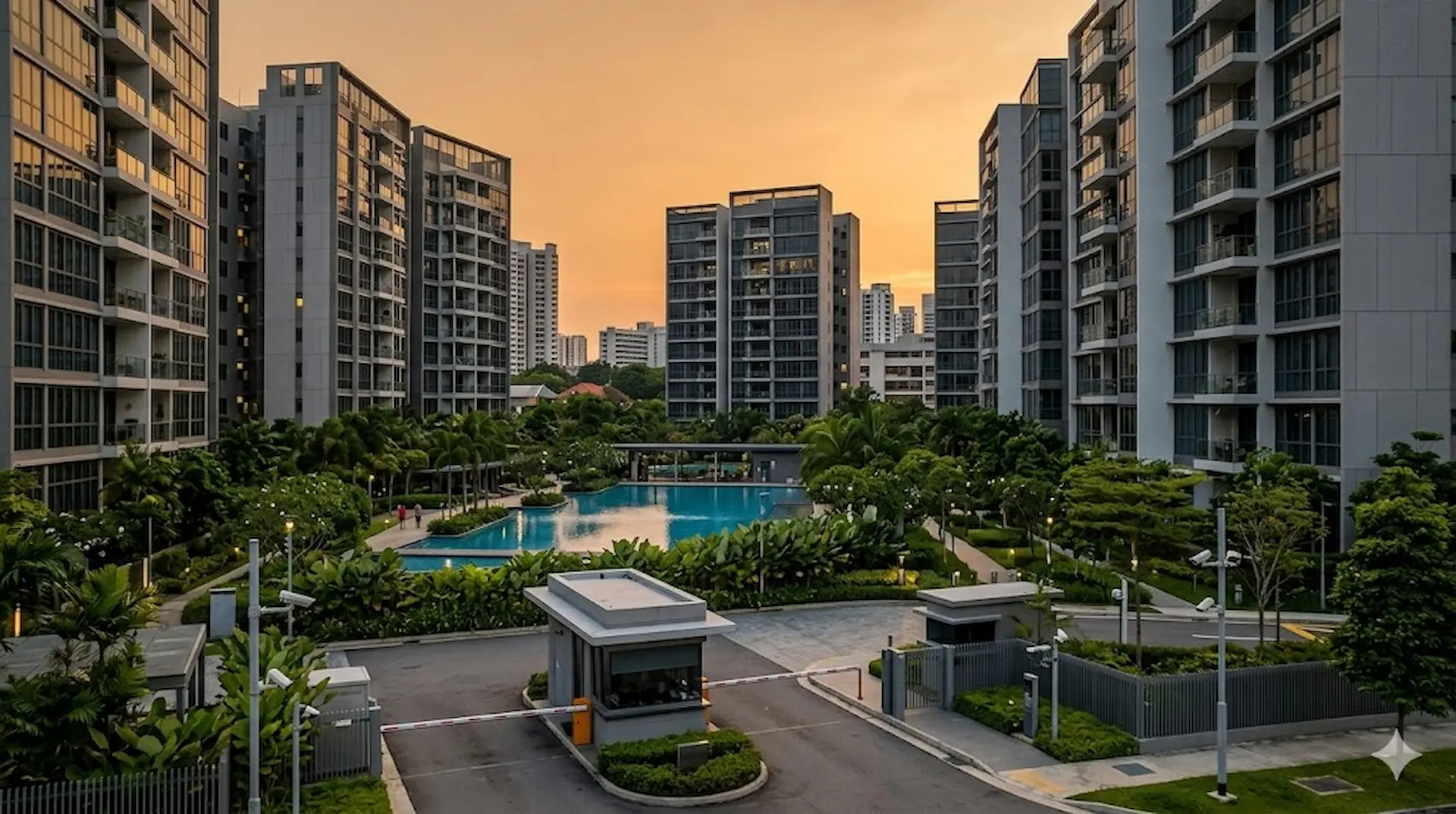
Why Condominium Teams Choose Securevision
Live-Environment Experience
We specialise in upgrades for occupied estates. Our phasing strategies ensure that security remains active during the transition and residents experience minimal disruption throughout the installation period.
Integrated System Design
We design integrated architectures that connect intercom, access, surveillance, and vehicle management into a single operational environment: so guards and management teams work from one picture rather than four separate systems.
Reduced Guard Workload
Our designs automate the routine tasks that currently consume guard time: visitor logbooks, manual barrier triggers, phone calls to residents. Guards freed from repetitive tasks provide better patrol coverage and more attentive response.
Common Estate Challenges We Resolve
These pages address common estate management challenges that condominium security systems directly resolve. Each one goes deeper into the problem, what causes it, and how it is typically solved across Singapore estates.
Reduce security manpower without compromising safety
Optimise operations to lower guard headcount and recurring MCST costs while maintaining strict estate safety standards.
View Solution Guide →Improve visitor management at your estate entrance
Eliminate visitor registration bottlenecks, resident waiting times, and congestion at your estate's main entrance.
View Solution Guide →Automate vehicle access and reduce guardhouse workload
Deploy Licence Plate Recognition and automated barriers to streamline resident entry and reduce manual guard workload.
View Solution Guide →Who Condominium Security Is For: and Where to Start
Condominium security decisions involve multiple stakeholders and a formal approval process. This section helps you identify your role and the right starting point.
This Is For You If…
You are a member of the MCST council or a Managing Agent responsible for the security infrastructure of a condominium or private estate in Singapore.
Your estate's CCTV, access control, or vehicle management systems are ageing: more than five to seven years old: and you are planning a formal upgrade proposal for the AGM.
You have recurring issues with unauthorised access, visitor management, or tailgating at the car park barrier that current systems are not resolving.
You are transitioning between Managing Agents and need an independent assessment of the estate's security infrastructure before handover.
Your guard team is spending disproportionate time on manual tasks: visitor logbooks, phone calls to residents, manual vehicle checks: that technology should be handling.
You are a security contractor or guarding company that has been appointed to an estate and needs a technology partner for systems integration.
You May Not Need This Yet If…
Your estate completed a full security upgrade within the last three years and systems are functioning without significant operational issues: annual maintenance servicing may be all that is required.
You are an individual resident: security decisions for common areas rest with the MCST council, not individual unit owners. Your Managing Agent is the right first contact.
Your primary concern is unit-level security: door access, home alarm, or intercom inside your unit: that falls under residential systems, not estate infrastructure.
AGM Proposals: We Can Help
If you need to bring a security upgrade proposal to the AGM, we can provide an independent site assessment report, system specification, and cost estimate in a format suitable for council presentation. This is a common part of our engagement with MCSTs and Managing Agents.
What to Prepare Before the Assessment
The number of residential units and the number of car park lots.
Current systems on site: CCTV brand, access control, barrier and LPR system, intercom: and approximate installation year.
Known operational issues: where the guard team spends the most manual effort, recurring security incidents, resident complaints.
Whether there is an existing maintenance contract and who currently holds it.
Whether there is a budget approved or whether the assessment is to inform an upcoming AGM proposal.
Frequently Asked Questions
Questions we hear from MCST councils, managing agents, and estate management teams evaluating condominium security upgrades.
How often should condominium security systems be upgraded?
As a general guide, analogue CCTV systems older than five to seven years are worth reviewing: IP replacements offer significantly better resolution, night visibility, and remote access. Intercom systems should be reviewed when call quality deteriorates, when residents cannot be reached reliably, or when the estate wants to move to mobile app access. We recommend a no-obligation assessment rather than a time-based rule: the right answer depends on the condition and capability of what is currently on site.
Can existing intercom wiring be reused in an upgrade?
Often yes. Many modern IP intercom systems are designed to run on existing 2-wire or Cat5 cabling, which means the wiring infrastructure installed years ago can often carry a new system without full recabling. Whether this is feasible depends on cable condition, distance runs, and the intercom system being considered. We assess wiring as part of every site survey before recommending a recabling scope.
Can residents use mobile phones instead of physical access cards?
Yes. Modern estate management platforms allow residents to use their mobile phone as their primary credential: for lobby access, facility booking, and visitor authorisation. Physical cards remain available as a backup. The mobile credential is managed through the resident app and can be updated or revoked instantly by the management team without issuing a new card.
What happens to residents during an intercom upgrade?
We phase intercom upgrades to maintain security continuity throughout the project. The old system remains active while new hardware is installed unit by unit. Residents are notified in advance of the changeover date for their unit. Guard coverage is maintained at all times during the transition. For large estates, the upgrade proceeds block by block so that no entire section of the estate is without intercom coverage at any point.
How long does a condominium security upgrade take?
For a mid-sized estate of 200 to 400 units, a full intercom replacement typically takes three to six weeks depending on access scheduling with residents. CCTV and access control upgrades to common areas can often be completed within one to two weeks as they do not require unit-level access. We present a phased schedule as part of the proposal so the MCST council and managing agent can plan resident communication in advance.
Can visitor management be integrated with the intercom system?
Yes. Visitor management and intercom integration is one of the most common improvements we implement. When a visitor arrives, the guard registers their details and the system notifies the resident. The resident authorises entry from their mobile app. The entire interaction is logged: visitor name, arrival time, authorising resident, and entry point: creating an audit trail for MCST governance and incident resolution.
Do all residents need to change their access cards during an upgrade?
Not necessarily. If the new access control system supports the same card technology as the existing one: typically MIFARE or DESFire: existing cards can often be enrolled into the new system without replacement. Where a technology change is required, card replacement is phased alongside the hardware installation rather than done all at once. We clarify the card migration plan as part of the proposal so there are no surprises for residents or the management team.
Can barriers and LPR systems be upgraded separately from the rest of the estate?
Yes. Barrier and LPR systems can be upgraded independently as a standalone project. Many estates start with a vehicle access improvement: adding LPR, upgrading visitor vehicle workflows, or replacing an ageing barrier: before addressing intercom or CCTV. The vehicle access system can be integrated with the broader estate management platform when the full upgrade proceeds.
How should MCST councils evaluate competing security proposals?
We recommend evaluating proposals on four dimensions: scope clarity: does the proposal specify exactly what is and is not included; brand and component quality: are the cameras, intercoms, and access readers from established manufacturers with local support; integration capability: can the systems work together and connect to future additions; and after-sales commitment: does the contractor have a track record of supporting estates after installation. Price matters, but a lower price that produces a fragmented, poorly integrated system creates higher long-term costs. We are happy to provide a brief evaluation framework for MCST councils preparing to assess competing proposals.
Ready to Upgrade Your Estate Security?
Tell us about your estate. We will assess it, identify the gaps, and design a system that works as one: without disrupting residents during the transition.
Licensed by the Police Force: Licence · Serving Singapore since 2006