Security Systems Designed Around the Needs of Care Facilities
Integrated security for Singapore nursing homes, senior day care centres, and care facilities: protecting residents while supporting care teams and MOH compliance.
Serving nursing homes and care facilities across Singapore since 2006.
In Short
What Healthcare Security Actually Needs to Do
Healthcare security is about protecting vulnerable residents while supporting care teams and maintaining regulatory compliance. Most nursing homes, day care centres, and specialist care facilities need CCTV, access control, visitor management, staff communications, and incident reporting working together. The objective is not maximum restriction. The objective is creating a safe environment that supports care delivery, respects resident dignity, and gives management the visibility to act when something goes wrong.
Safety must never feel like surveillance. When security becomes highly visible: alarming, institutional, or intrusive: it is usually a sign that the design is not working properly. The right system operates quietly in the background and is most noticeable in the quality of the records it produces when they are needed.
Security Built on Care Logic
In care facilities, security is successful when it supports care delivery rather than disrupting it. Our approach focuses on protection without institutional harshness: ensuring that safety measures align with daily care workflows and respect the dignity of residents.
By designing systems that work quietly in the background, we help facility operators maintain a high-assurance environment where residents and staff can move with dignity and confidence.
What Care Environments Need to Balance Every Day
Safety Without Restriction
The challenge is keeping residents safe without making the facility feel like a locked institution. Smart technology maintains the boundaries that matter while preserving as much freedom of movement as each resident's care plan supports.
Multiple User Groups
Staff, residents, visitors, and contractors all require different movement permissions and access levels: and a single access policy applied to all of them creates friction for the people who should move freely and gaps for the people who should not.
Accountability and Visibility
When an incident occurs, the team should be able to determine quickly what happened, who was involved, and how to respond. A digital audit trail: access logs, camera footage, visitor records: provides that clarity without requiring manual investigation across paper records.
Welfare and Compliance
MOH care standards and PDPA requirements both impose obligations on how facilities manage access, document incidents, and protect resident privacy. Meeting these requirements is not a separate task from running a good facility: the right system makes compliance a natural output of daily operations.
Common Mistakes We See in Healthcare Security Projects
After working with nursing homes and specialist care facilities across Singapore, several issues appear repeatedly.
Security Designed Without Involving Care Staff
The people who use the security system every day: nurses, care coordinators, floor staff: are often consulted too late or not at all during the design process. The result is access control configurations that conflict with care routines, cameras that cover the wrong areas, and alert systems that generate noise rather than useful information. The security design should start with how care teams actually work, not with a standard commercial building template.
Too Much Focus on Restriction
Healthcare environments are fundamentally different from commercial buildings. Locking every door, requiring credentials for every movement, and maximising surveillance coverage is not the goal. The goal is protecting specific residents who are at risk while maintaining a calm, dignified environment for everyone else. Over-engineered restriction creates stress for residents and friction for care staff without improving safety outcomes.
Visitor Management Treated as a Single Process
Families, professional caregivers, volunteers, contractors, and delivery personnel all visit care facilities: but they have different risk profiles, different access requirements, and different verification needs. A single visitor sign-in process applied to all of them is either too loose for contractors or too burdensome for family members who visit daily. The system should handle each category differently.
Incident Documentation Remains Manual
Many facilities only discover the weakness in their incident documentation process after an incident occurs and they need to produce records quickly. Manually compiled reports from paper sign-in sheets, guard logbooks, and disconnected CCTV systems take time and produce incomplete pictures. Digital audit trails: where access logs, camera footage, and visitor records share a common timeline: make investigations straightforward and regulatory submissions accurate.
A Practitioner Observation
The most common request we receive from nursing home operators is for a system that will satisfy the next MOH inspection. That is a reasonable starting point. But the facilities that get the most from their security investment are the ones that also asked: "what does the care team actually need to do their job better?" Those two requirements usually point to the same system: but the design looks very different depending on which question you start with.
Choose Your Care Environment
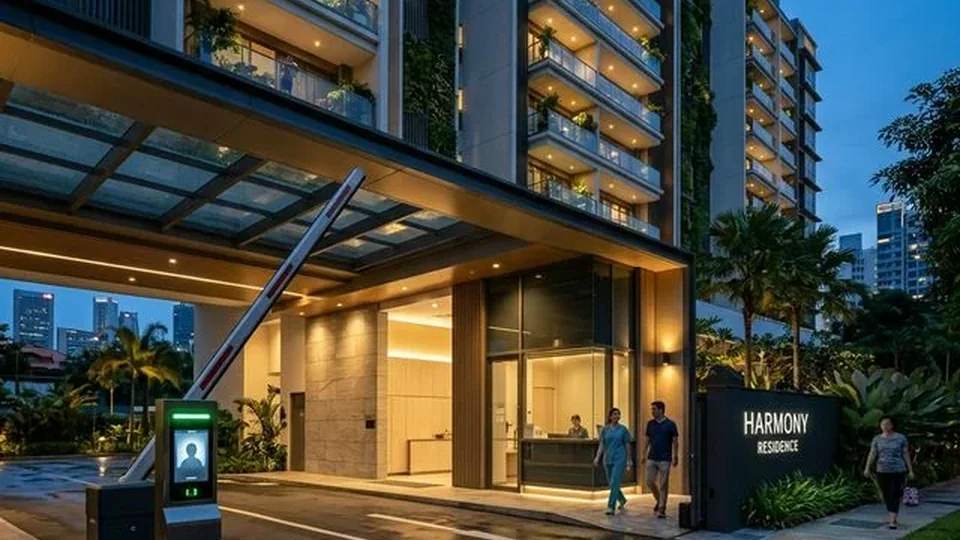
Nursing & Aged Care
Wandering prevention, resident safety monitoring, and staff coordination for nursing homes and residential care facilities.
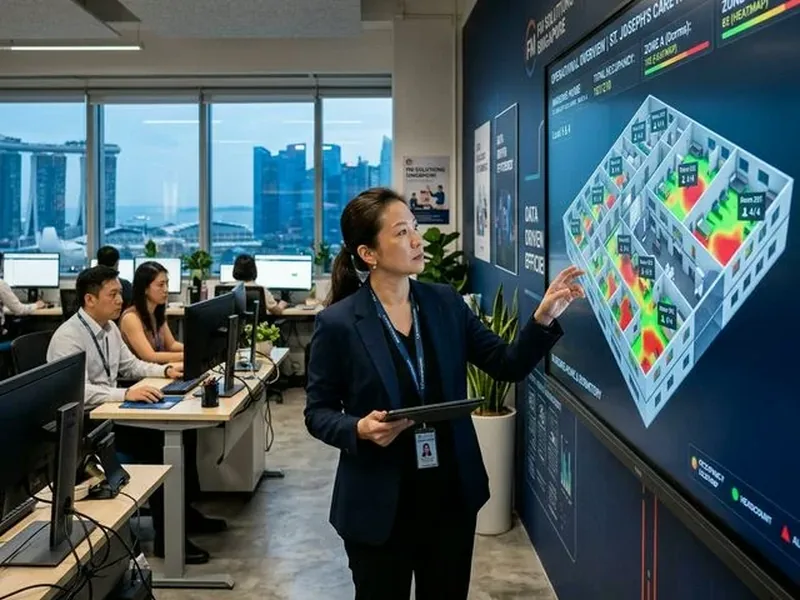
Day Care & Specialist Centres
Access control, visitor management, and safe-zone monitoring for senior day care, autism, and cerebral palsy centres.
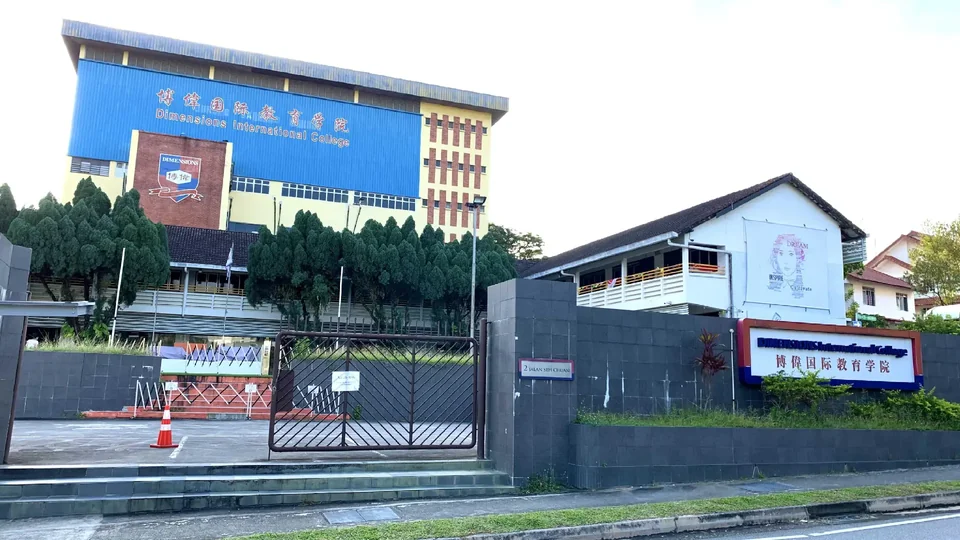
Community Hostels
Controlled access, visitor management, and staff accountability for transitional and community-managed accommodation.
What Goes Into a Healthcare Security System
Healthcare facilities have a different relationship with security. The systems must protect without intruding: supporting care team workflows, resident dignity, and clinical compliance at every point.
Selective Alarm Protection
Unlike other property types, burglar alarms in healthcare are not deployed facility-wide. The priority zones are medicine rooms, pharmaceutical storage, laboratories, and equipment rooms: areas where unauthorised access carries clinical and regulatory risk. Multi-zone alarm systems allow each of these areas to be independently armed and monitored. After-hours breaches trigger immediate notification to on-call staff and management, with CCTV integration for rapid visual verification.
CCTV & Patient Safety Analytics
Cameras in healthcare serve the care team as much as they serve security. In nursing homes, fall detection analytics alert staff the moment a resident goes down: reducing response time and generating the documented record required for incident reporting. For facilities where residents may wander, face detection allows nurses to locate a specific individual quickly across the camera network. Common areas, corridors, and external grounds are monitored for both safety and operational oversight, without intruding on private clinical spaces.
Zone Access Control
Strict zone access is the defining access requirement in healthcare: clinical areas, medication rooms, restricted wards, and staff-only zones must be accessible only to authorised personnel. Credential-based access by staff role ensures the right people reach the right areas without friction. Visitor access at reception is managed separately, with temporary credentials issued for specific floors or areas. Zone access logs provide the audit trail required for MOH compliance and accreditation purposes.
Intercom & Visitor Control
Entry intercom at the main reception and ward boundaries ensures every visitor is cleared before entering sensitive areas. For specialised rooms and locked wards, intercom provides a controlled communication point without requiring staff to physically open a door. Visitors to memory care units and psychiatric wards are managed through an additional layer of access verification. Emergency call points at key locations allow residents and staff to summon help quickly when needed.
IP Telephony
IP phone systems connect nursing stations, administrative offices, doctors' rooms, and specialist areas across the facility into a single network. Clinical staff can be reached on a direct extension regardless of which part of the building they are in. For multi-site healthcare operators, one IP PBX links all facilities with shared directories and call transfer. On-call routing ensures calls reach the right clinical team at any hour without requiring manual intervention at reception.
Vehicle Access & Carpark
Healthcare facilities handle a mix of vehicle types: staff, visitors, ambulances, and medical supply deliveries: each with different access priorities and timing. Carpark barriers manage general visitor and staff parking. LPR identifies registered staff vehicles for seamless entry during shift changes. Emergency vehicle lanes are kept clear through dedicated access points. We supply and install barrier infrastructure for carpark access control: automated payment systems are not currently within our scope of work.
Built to Support Care and Regulatory Requirements
Supporting mandatory attendance tracking and residence management standards for community accommodation environments.
Ensuring safety protocols, access control over clinical areas, and documentation standards required for MOH licensing and renewal.
Role-based access to footage, controlled retention schedules, and documented camera placement for PDPA compliance records.
Automated reporting and digital logs that simplify regulatory inspections and reduce the time required to prepare compliance submissions.
How We Approach a Healthcare Security Project
Our methodology for care environments focuses on building systems that are analytically powerful while remaining physically unobtrusive and emotionally passive for residents. Safety must never feel like surveillance.
Defining the safe corridors and restricted zones for residents and staff to engineer logic that detects departures from care routines without restricting normal daily movement.
Building a notification architecture where wandering alerts and access events trigger instantly at the nursing station or on staff mobile devices: with tiered escalation rather than facility-wide alarms.
Integrating access logs with surveillance to provide a clear, searchable digital record for MOH submissions and internal incident reviews: available when needed, not assembled under pressure.
Full handover and training for nursing station staff, facility managers, and care coordinators: so the system is used effectively from day one and does not depend on Securevision for routine operation.
What Affects the Cost of a Healthcare Security System?
Two facilities with the same number of residents may require very different solutions depending on care model, building layout, and compliance obligations.
Number of Residents and Wards
Resident count and the number of separately managed wards drive the zone access configuration, camera coverage scope, and the volume of alert logic that needs to be configured. A single-floor day care centre and a multi-ward nursing home have fundamentally different scopes even at similar occupancy numbers.
Restricted Zone Complexity
The number of independently controlled zones: medication rooms, clinical areas, locked wards, staff-only spaces: determines the access control hardware count and the complexity of the credential management configuration. Each zone requires its own door controller, reader, and access policy.
Wandering Prevention Requirements
Facilities with memory care or dementia residents require additional detection layers: camera analytics for movement monitoring, door sensors at perimeter points, and notification infrastructure to nursing stations and staff devices. The scope depends on the number of at-risk residents and the layout of the areas they occupy.
Existing Infrastructure
Facilities with structured cabling, managed network switches, and functioning conduit can often be upgraded at lower cost. Older buildings where all cabling needs to be installed from scratch: while the facility remains occupied and operational: require more careful phasing and proportionally more installation time.
Visitor Volume and Management Requirements
Facilities with high daily visitor volumes: active family engagement programmes, therapy visitors, volunteer programmes: require more robust visitor management workflows than facilities with restricted visiting hours. The visitor system scope scales with the daily visitor count and the complexity of the access rules that apply to different visitor categories.
Multi-Site and Reporting Requirements
Healthcare groups operating multiple facilities benefit from centralised visibility: a single management platform covering all sites, with consolidated reporting for MOH submissions. Multi-site platform integration adds to the project scope but produces substantially better operational visibility and reduces the administrative burden on each individual facility team.
A Practitioner Observation
The most cost-effective healthcare security projects we have worked on started with a clear understanding of which residents are at risk, which areas require protection, and what the care team needs to respond effectively. That conversation: before any hardware is specified: usually halves the scope of what initially appears to be needed, and ensures that what is installed actually gets used.
Plan Your Healthcare Security Strategy
A practical checklist to help you assess your current setup, identify gaps, and plan improvements for nursing homes, day care centres, and specialist care facilities.
Care Facility Security Planning Checklist
Download the Guide
Frequently Asked Questions
Questions we regularly hear from nursing home administrators and care facility managers evaluating security upgrades.
How do you prevent residents from leaving restricted zones without creating a distressing environment?
We use a layered approach: door controllers that require a staff card or PIN to exit restricted zones, combined with camera-based movement alerts that notify the nursing station before a resident reaches an unsupervised exit. The hardware is discreet: no visible alarms or bars: so the environment remains calm while the care team stays informed.
Can your system alert nursing staff on their mobile devices when a wandering incident occurs?
Yes. Our care management platform supports push notifications to designated staff devices when access events or movement alerts are triggered. Alerts can be tiered: immediate notifications to the duty nurse, summary reports to the facility manager: and can be configured by zone, time of day, and resident risk profile.
How do you handle the different access needs of residents, care staff, family visitors, and contractors?
We configure role-based access tiers during system design. Care staff have access to all resident zones. Family visitors are managed through a pre-registration or intercom system at the main entrance. Contractors receive time-limited credentials tied to specific non-resident areas and working hours. All access events are logged individually and can be reviewed by the facility administrator.
Does your system meet MOH requirements for residential care facilities?
We design systems to support MOH licensing requirements for residential care facilities, including access control over medication storage, visitor management documentation, and CCTV coverage of common areas. We provide system documentation at handover that can be included in your MOH licence renewal submission. We recommend reviewing your specific licence conditions with us before design begins.
How do you handle PDPA compliance for surveillance footage in a care setting?
We configure NVR systems with role-based access controls: only authorised staff can view footage, and access is logged. Retention schedules are set automatically so footage is not kept beyond what is necessary. We avoid placing cameras in private areas such as resident bedrooms and bathrooms, and provide documentation of camera placement for your PDPA records.
Can you install systems without disrupting residents and daily care routines?
Yes: phased installation is standard for us in occupied care facilities. We work with your care coordinator to schedule installation activities during lower-activity periods, avoid disrupting meal times and therapy sessions, and complete noisy work such as cabling during times that minimise impact on residents. All systems are tested and operational before we leave each phase.
We Also Work With
Our care environment experience extends across Singapore's full social and civic infrastructure.
Managed Living
Worker dormitories and co-living developments share resident management and duty-of-care obligations with care facilities: at a larger scale and with MOM compliance requirements.
Institutions
Schools, childcare centres, and government-funded civic facilities face similar safeguarding and visitor management requirements to healthcare and care environments.
Commercial
Medical clinics, specialist centres, and healthcare-adjacent commercial properties require security that balances patient privacy with clinical access control requirements.
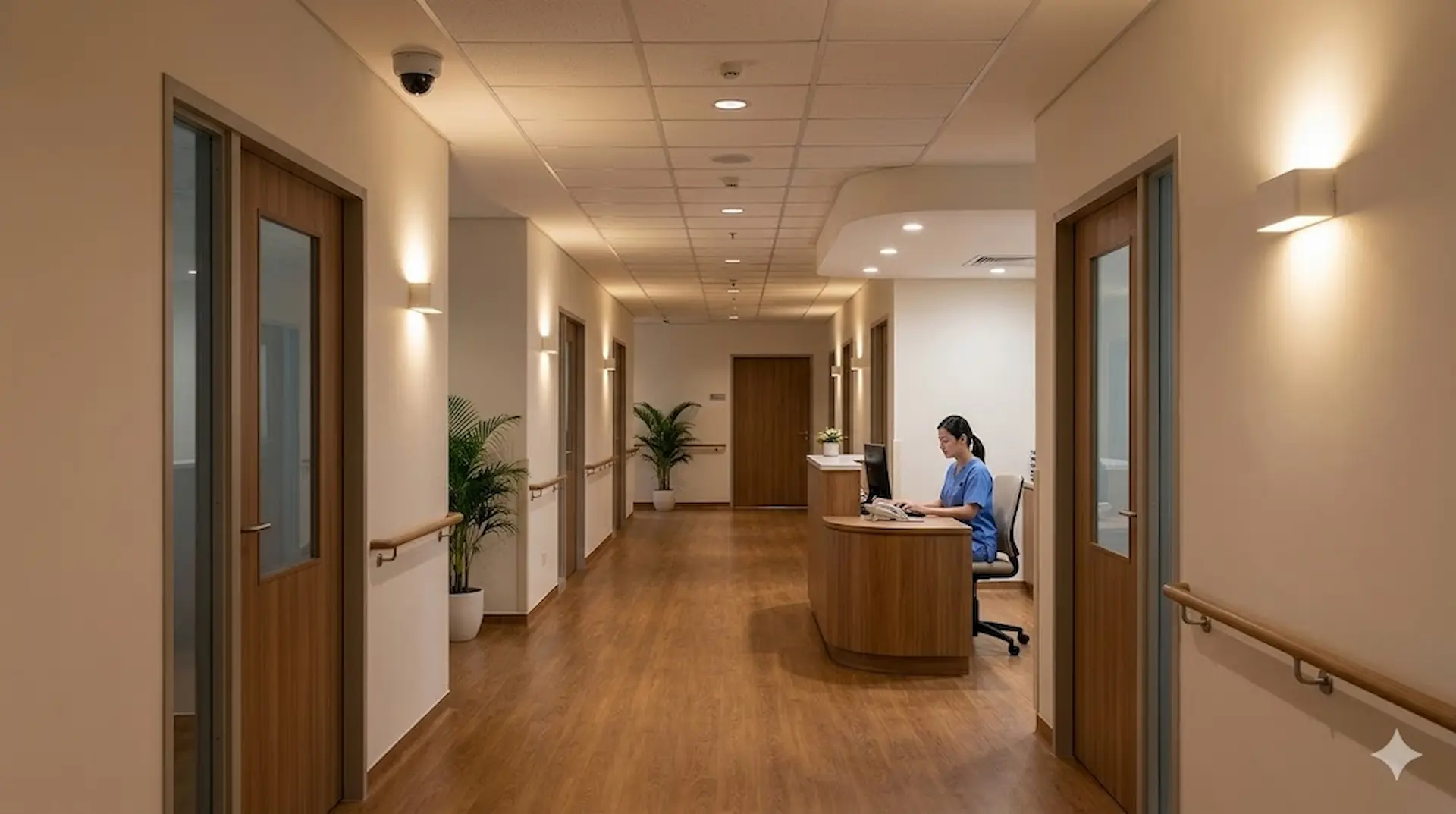
Ready to Design Security Around Your Residents?
Tell us about your facility. We will assess your care environment, identify the safety and compliance gaps, and design a system that supports your team without disrupting your residents.
Licensed by the Police Force: Licence · Serving Singapore since 2006