Security Systems Designed for Schools, Public Institutions, and Community Facilities
Integrated security systems for Singapore schools, government facilities, and community spaces: safeguarding people while supporting daily operations and compliance.
Supporting institutional and community environments across Singapore.
In Short
What Institutional Security Actually Needs to Do
Institutional security is about protecting people, managing access, and maintaining accountability without creating unnecessary barriers. Schools, public facilities, religious organisations, and community spaces require CCTV, access control, visitor management, communications, and compliance reporting systems working together. The objective is not maximum restriction. The objective is creating a safe environment that remains accessible, welcoming, and operationally efficient.
The best security system is often the one people hardly notice: because it supports the way the facility already operates rather than working against it. Visitor management that is fast and professional does not feel like a security barrier. Access control that lets staff move freely does not feel like restriction. The design objective is to place controls where they are genuinely needed and to make them as frictionless as possible for legitimate users.
Security as a Supportive System
In institutional environments, security is successful when it supports daily use without becoming a barrier. Our approach focuses on enablement: ensuring that safety measures provide maximum protection with minimum friction for the people who use the facility every day.
By designing systems that work within the educational or community rhythm of the facility, we help facility managers and leadership maintain a secure environment that still feels open, welcoming, and operationally efficient.
What Institutions Need to Balance Every Day
Safeguarding Without Restricting Access
Keep people safe while maintaining a welcoming environment that does not feel like a fortified facility. The security design should be proportionate to the actual risk profile of each space: a school gate and a government server room require very different levels of control.
Managing Multiple User Groups
Students, staff, parents, visitors, volunteers, and contractors each require different access rights and different handling at entry points. A single access policy applied to all of them creates friction for legitimate users without meaningfully improving security.
Compliance and Accountability
Rigorous digital records and audit trails are required for MOE safeguarding requirements, PDPA compliance, SCDF fire safety integration, and the uptime and documentation standards expected by statutory boards and government facilities.
Clear Response During Incidents
When an incident occurs, the system should provide immediate visibility of what happened, where, and who was involved: and support the communication and lockdown protocols that the institution's emergency procedures require.
Common Mistakes We See in Institutional Security Projects
After working with schools, public facilities, and community organisations across Singapore, several issues appear repeatedly.
Applying Commercial Security Design to Institutional Environments
Security measures that work well in an office building create unnecessary friction in a school or community facility. A turnstile that processes one person per second is appropriate for a transit hub. In a school corridor, it creates a bottleneck that disrupts the start of every lesson. The design must account for how the facility actually operates: not simply replicate a commercial security template at a different address.
Designing Without Mapping the User Groups
Students, teaching staff, administrative staff, parents, volunteers, contractors, and members of the public all have different relationships with the institution, different movement patterns, and different access requirements. Designing access control without mapping each group: who they are, where they go, when they arrive and leave: produces a system that is either too restrictive for daily operations or too permissive for genuine safeguarding.
Planning for Normal Operations Without Planning for Emergencies
Many institutions focus on how the security system will function day-to-day and give less attention to how it will behave during a fire evacuation, a lockdown, or an incident requiring the facility to be quickly secured. Fail-safe door configurations, emergency mustering capability, and communication during a lockdown need to be designed in from the outset: they cannot be reliably retrofitted after installation.
Focusing Only on Entry Control
Security is not just about who enters. Once someone has passed the front gate, the system should still provide visibility of where they go, what they access, and what happens if something goes wrong. Institutions that invest heavily in gate access control but have no interior camera coverage or audit trail capability are well-protected at the perimeter and largely blind everywhere else.
A Practitioner Observation
The most productive institutional security conversations we have start with the facilities manager describing a specific situation that made them realise the current system was not adequate: a safeguarding near-miss, a compliance review that highlighted a gap, or an incident that took too long to investigate because the records were incomplete. Starting from a real operational problem produces a much better security design than starting from a product catalogue.
Choose Your Institutional Context
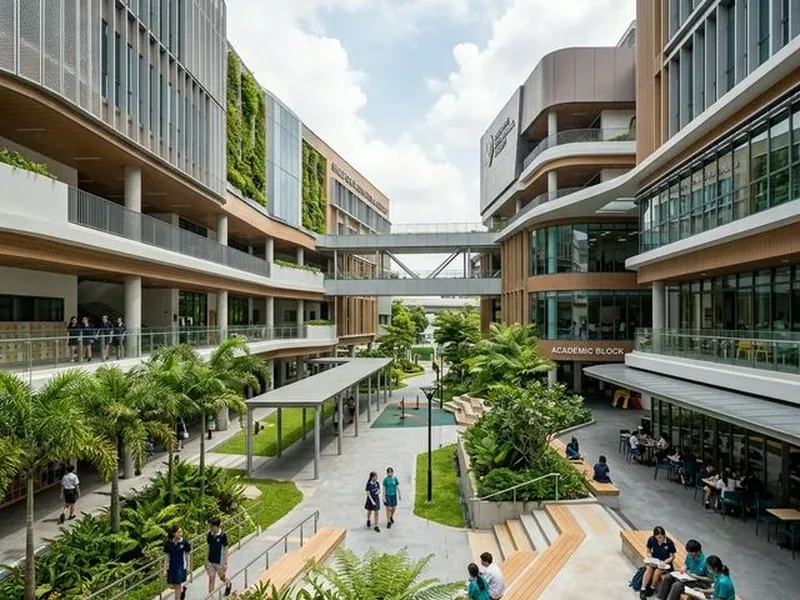
Schools & Education
Security for campuses, student safeguarding, controlled access, and seamless parent interactions.
View Education Solutions →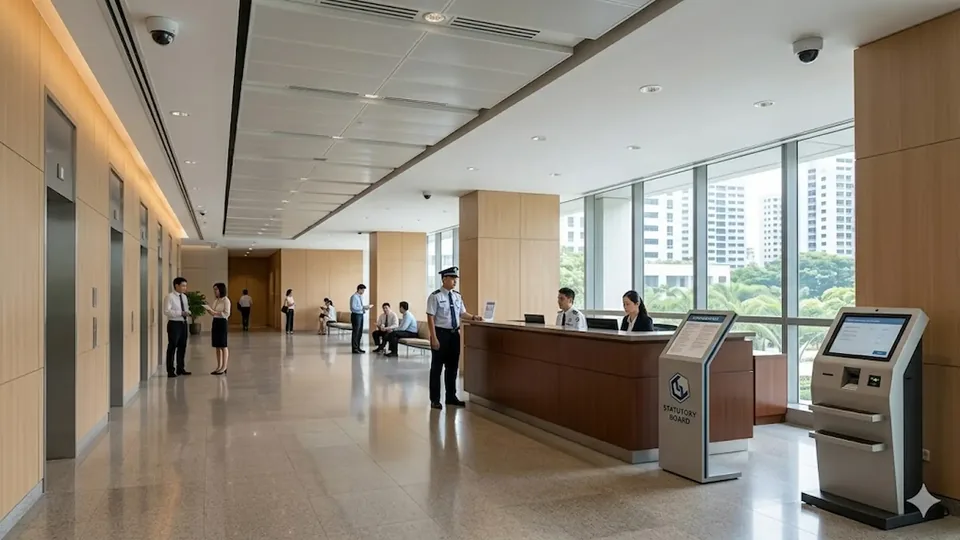
Statutory Boards & Public Facilities
Security for public-facing environments with a focus on compliance, accessibility, and operational flow.
View Public Sector Solutions →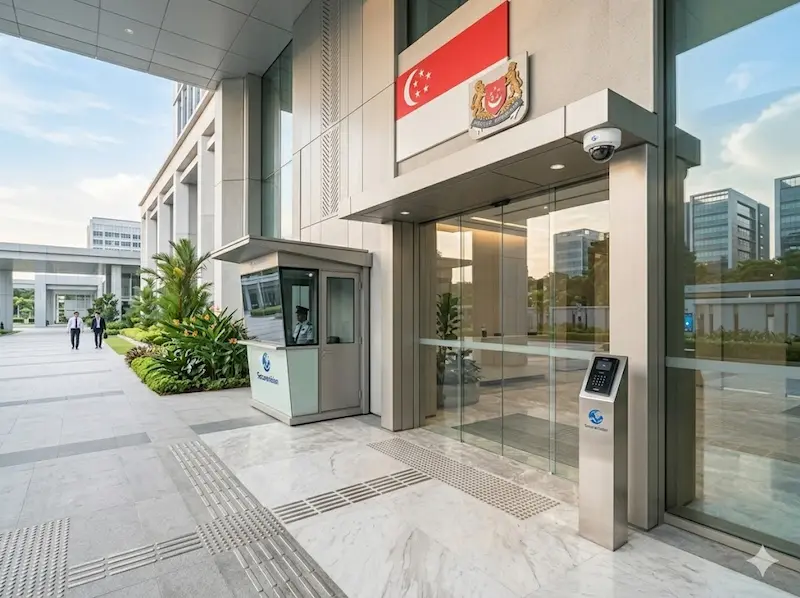
Religious & Community Sites
Community safety that balances fundamental openness with reliable protection for gatherings and events.
View Community Solutions →What Goes Into an Institutional Security System
Schools, government offices, churches, and civic facilities each have distinct security requirements: public accessibility balanced against strict protection of staff, students, and sensitive areas. These are the six system groups we deploy.
Burglar Alarm & Zone Protection
Institutional buildings require after-hours zone protection for offices, server rooms, record stores, and sensitive areas: particularly in government facilities and schools where data protection and compliance are mandatory. Multi-zone alarm systems allow each area to be armed independently with different response rules. Triggered alarms notify designated contacts and link to CCTV for immediate visual verification of the breach location.
CCTV & Surveillance
Public institutions require camera coverage that balances safety with accountability. Cameras at entrances, corridors, carparks, and public areas provide continuous monitoring and an evidential record for incident investigation. For schools, cameras support safeguarding protocols: recording movements in shared areas without intruding on private spaces. For government facilities, footage retention and access logging must meet specific compliance requirements. We have installed for NEA and STA.
Access Control & Visitor Management
Staff and contractor access is managed by credential: biometric, card, or PIN: with zone restrictions that prevent unauthorised entry into sensitive areas during and after operating hours. Visitor Management Systems log every arrival, issue temporary passes, and maintain an audit trail for compliance and accountability. For schools, student movement can be restricted to designated zones during school hours. Attendance clocking can be incorporated into the same credential infrastructure.
Intercom
Main gate intercom allows visitors to identify themselves and state their purpose before being granted entry: a critical control point for schools and government facilities where unvetted access is a safeguarding concern. Internal intercom connects reception, security posts, and key departments for coordinated response. For larger campuses, intercom systems support paging and announcement functions across multiple buildings.
IP Telephony
IP telephone systems connect administrative offices, security posts, classrooms, and departments across the institution into a single network. Auto-attendant routes external calls to the right department without tying up reception staff. Call recording supports accountability requirements in regulated environments. For multi-site institutions, one IP PBX links all locations with shared extension directories.
Vehicle Access & LPR
Controlled vehicle access at the main gate manages staff, contractor, and official service vehicle entry. LPR identifies registered vehicles for seamless daily access. Visitor vehicles are logged with purpose and time recorded. For schools, parent drop-off and pick-up management reduces congestion at peak hours. Government facilities use barrier systems with guard integration to enforce strict vehicle access protocols and maintain entry logs for compliance.
Built to Support Institutional Requirements
Supporting safeguarding and emergency protocols for educational institutions and clusters.
Integrated fail-safe door release protocols for public facility evacuation compliance.
Role-based access to footage and records, with documented camera placement for PDPA records.
Systems designed to meet the uptime and audit documentation standards of statutory boards.
How We Approach an Institutional Security Project
Every institution has a different user population, operational rhythm, and compliance obligation. We begin with the people and the process before specifying any hardware.
Defining the movement patterns of students, staff, visitors, and public users to engineer role-based access logic that does not hinder the facility's daily flow.
Building an integrated architecture where surveillance and access control communicate with each other: ensuring emergency protocols trigger correctly across the campus or facility when needed.
Handing over a management platform that provides administrators with a complete digital audit trail and real-time visibility of the security system's status.
Full training for security staff, administrators, and facilities managers so the system is operated effectively from day one without dependence on Securevision for routine tasks.
What Affects the Cost of an Institutional Security System?
Two institutions of similar size may require very different solutions depending on operational complexity, safeguarding requirements, and existing infrastructure.
Number of Buildings and Campuses
Multi-building campuses require cabling between buildings, inter-building access control integration, and camera coverage of the outdoor spaces between structures: all of which add significantly to the project scope compared with a single-building facility.
User Population and Access Complexity
The number of distinct user groups: and the granularity of access rules that need to be configured for each: drives the access control configuration complexity. A facility with three user categories and simple zone rules is much faster to configure than one with eight user categories, time-based access windows, and multi-zone restrictions.
Visitor Volume and Management Requirements
Schools and government facilities with high daily visitor volumes require more robust visitor management workflows. Institutions with walk-in public access and high daily throughput require different handling from facilities where all visitors are pre-scheduled and escorted.
Compliance and Documentation Requirements
Government facilities and statutory boards operating under specific audit requirements: uptime documentation, access log retention, camera placement records: require more detailed commissioning documentation and may require system configurations that go beyond what a standard commercial installation would include.
Existing Infrastructure
Institutions with structured cabling, managed network switches, and functioning conduit can be upgraded at lower cost than those where all infrastructure needs to be built from scratch. Many school buildings have legacy cabling that requires assessment before a scope is finalised: reuse is often possible but must be verified on site.
Emergency and Safety Integration
Institutions requiring fail-safe door integration with the fire alarm system, emergency mustering capability, or lockdown functionality need hardware and configuration beyond standard access control. These requirements are typically non-negotiable for schools and government facilities: and should be scoped at the start rather than added later.
A Practitioner Observation
The most consistent cost-saving we achieve in institutional security projects comes from identifying which existing components can be retained before the scope is written. Many schools have functioning cabling, serviceable intercom systems, or access readers that can be enrolled into a new system without replacement. The assessment determines this clearly: and a well-scoped project that retains what is working costs significantly less than one that replaces everything by default.
Plan Your Institutional Security Strategy
Download a practical guide to help you assess your current setup, identify gaps, and plan improvements for schools, campuses, and community facilities.
Institutional Security Planning Checklist
Download the Guide
Frequently Asked Questions
Questions we hear from school administrators, facilities managers, and government facilities teams evaluating security upgrades.
What security systems does a school typically require?
Most schools require CCTV coverage of entrances, corridors, common areas, and carparks with safeguarding-compliant camera placement; access control at staff entrances and sensitive areas; visitor management at the main gate with temporary pass issuance; intercom for visitor identification before entry; and vehicle access management for the drop-off and pick-up zone. The starting point depends on the school's size, layout, and current safeguarding requirements.
Can visitor management integrate with existing access control?
Yes. Visitor management and access control integration means that a visitor's temporary credential is issued by the same system that manages staff and contractor access. The visitor record is linked to the purpose of visit, the zones they are permitted to enter, and the duration of their access. All visitor interactions are logged automatically and can be searched by date, individual, or entry point for compliance reporting and incident investigation.
How can institutions balance openness with security?
The best security system is often the one people hardly notice because it supports the way the facility already operates. Visitor management that is fast and professional does not feel like a security barrier. Access control that allows staff to move freely without constant credential friction is not experienced as restriction. The design objective is to place controls at the points where they are genuinely needed, and to make those controls as frictionless as possible for legitimate users.
Can existing CCTV systems be reused in an institutional upgrade?
Often yes, depending on camera condition, resolution, and cabling infrastructure. Existing cameras that still produce adequate resolution for the compliance requirements of the institution can often be retained while adding newer cameras at positions that need improvement. We assess existing camera coverage and condition during the site survey before recommending any replacement scope.
How long does an institutional security upgrade take?
For a single-campus school or community facility, a CCTV and access control upgrade typically takes one to two weeks depending on cabling requirements and the number of controlled access points. Larger multi-building campuses or government facilities with more complex compliance requirements take longer. We phase installation to minimise disruption: noisy cabling work is scheduled outside school hours or operating periods where required.
Can access rights be managed differently for staff, students, and visitors?
Yes. Role-based access configuration is standard in institutional environments. Staff credentials provide access to all areas relevant to their role. Student movement can be restricted to designated zones during school hours. Visitor credentials are time-limited and zone-specific. All access events are logged against the individual's credential for audit and accountability purposes.
What happens during a power or network failure?
Access control hardware is configured with local storage and offline mode: controlled doors continue to function during network interruptions. Fail-safe door configurations ensure that fire exit doors comply with SCDF requirements regardless of system status. For schools and government facilities, we specify UPS backup for critical entry points so that a power outage does not create a security gap.
How often should institutional security systems be reviewed?
We recommend a review when the institution expands, when the user population changes significantly, when compliance requirements are updated, or when the security system is more than five years old. Annual maintenance servicing covers hardware condition and software updates. A security review: examining whether the system still covers the right areas with the right access logic: should be triggered by significant operational changes rather than a fixed calendar.
Ready to Design Security Around Your Institution?
Tell us about your facility. We will assess your safeguarding requirements, access workflows, and compliance obligations: and design a system that supports daily operations without becoming a barrier.
Licensed by the Police Force: Licence · Serving Singapore since 2006