Resilience for Singapore's Mission-Critical Operations
We engineer security systems for Singapore factories, warehouses, and logistics hubs: built for harsh environments and high-throughput operations.
Serving Singapore industrial facilities since .
In Short
What Industrial Security Actually Needs to Do
Industrial security is about protecting operations, maintaining compliance, and controlling the movement of people, vehicles, and assets across the site. Most factories, warehouses, logistics hubs, and industrial estates require CCTV, access control, vehicle management, communications, and monitoring systems working together. The objective is not simply preventing theft. The objective is maintaining operational continuity while providing the visibility and accountability that safety audits, compliance inspections, and incident investigations require.
Most industrial clients do not have a hardware problem. They have a visibility problem, a workflow problem, or a compliance problem. Security should not become the reason a truck is waiting at the gate or a production shift cannot start on time. The right system operates at the speed of the facility: not as a bottleneck in front of it.
The Invisible Costs of Fragile Industrial Security
In an industrial environment, security failure is not just about theft: it is about operational disruption. Fragmented systems, manual gate checks, and blind spots in sprawling yards create bottlenecks that drain productivity and introduce unacceptable risk.
Logistics Bottlenecks
Slow, manual vehicle check-ins create congestion at gantries, delaying delivery schedules and creating queues at peak arrival periods that affect production planning and logistics commitments downstream.
High-Value Shrinkage
Lack of centralised visibility across loading bays makes it difficult to verify inventory movement, correlate access records with stock discrepancies, or identify the specific point and time at which a loss occurred.
Compliance Gaps
Difficulties in maintaining WSH safety records, documenting restricted zone access, and producing the audit trails required for MOM, NEA, or sector-specific inspections: particularly when the security system and the safety monitoring system are disconnected.
Why "More Hardware" Is Not the Answer
Simply adding more cameras or guards often fails to solve the root problem. Without an architectural focus on integration and operational flow, systems become independent data islands that are ignored until an incident occurs: at which point the information needed to investigate is either missing or too difficult to retrieve quickly.
Disconnected Monitoring
When surveillance, access control, and vehicle gantries do not communicate with each other, facility managers are left with half a picture and double the work. An incident investigation that requires correlating an access log with a camera recording from the same gate at the same time becomes a manual exercise across systems that share no common reference point.
Consumer-Grade Fragility
Household-grade equipment fails rapidly in Singapore's high-humidity, high-heat industrial environments: producing a pattern of constant maintenance costs, reduced camera coverage, and reliability problems that emerge precisely when the system is most needed. Industrial environments require equipment specified and rated for the operating conditions of the site.
Which Best Describes Your Facility?
Logistics hubs, factories, and tech parks each have distinct security priorities: we have engineered for all of them.
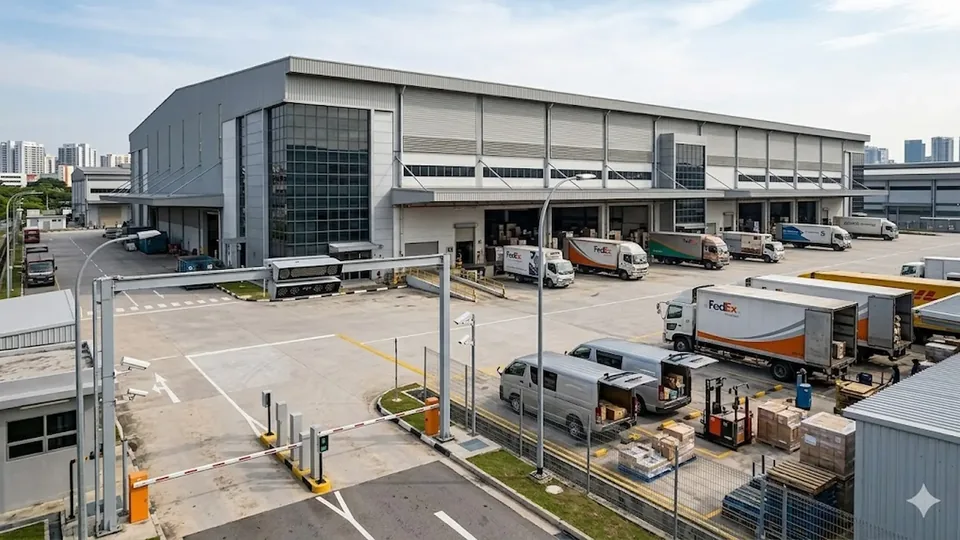
Logistics Hubs & Warehouses
High-volume vehicle throughput, LPR-automated gantry systems, loading bay surveillance, and audit-ready movement logs for 3PL and distribution operations.
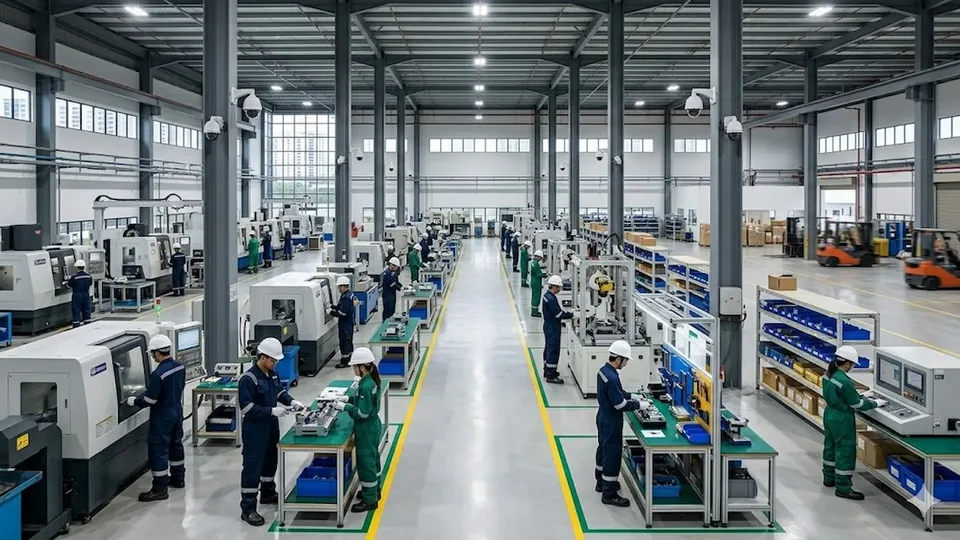
Factories & Manufacturing
Production floor surveillance, WSH compliance monitoring, AI-based PPE detection, and multi-zone access control for manufacturing and production facilities.
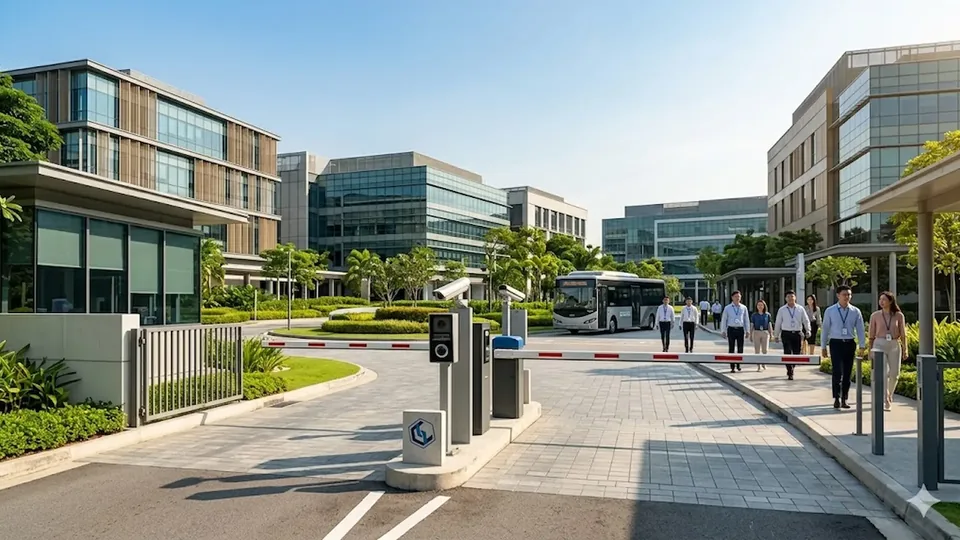
Tech Parks & Industrial Estates
Multi-tenant access management, perimeter protection, and centralised oversight for industrial estate operators and property managers.
Engineering Reliability First, Equipment Second
We treat security as a mission-critical utility. Our engineering process focuses on building a resilient architecture that supports the speed of your operations while providing the visibility and accountability your compliance and safety requirements demand.
Operational Resilience
We redesign the security workflow to remove human error and operational friction. By automating vehicle flow with LPR and unifying multi-site surveillance into a single management platform, security becomes a passive layer that works reliably without constant manual oversight: and that produces the audit-ready records needed for inspections without requiring manual compilation.
What Goes Into an Industrial Security System
Industrial sites: factories, warehouses, logistics hubs, and tech parks: require security that operates at the scale and pace of the facility itself. These are the six system groups we deploy.
Burglar Alarm & Zone Protection
Industrial facilities contain areas that require strict after-hours protection: server rooms, R&D labs, finance offices, and high-value inventory zones. Multi-zone alarm systems allow each area to be armed and monitored independently, with different response rules per zone. A breach in a restricted area triggers immediate notification to designated contacts and integrates with the CCTV system to surface the relevant camera view in real time.
CCTV & Wide-Area Surveillance
Industrial sites require camera coverage at a different scale: large perimeters, open yards, loading bays, production floors, and multiple entry and exit points all need to be visible. AI analytics detect loitering, perimeter breaches, and unusual movement patterns without requiring a guard to watch every screen. Cameras are also increasingly used for operational safety compliance: detecting PPE usage, enforcing no-smoking zones in restricted areas, and flagging safety violations on the production floor.
Access Control
Multi-zone access control governs who can enter production floors, restricted labs, server areas, and contractor zones. Staff, contractors, and visitors each have different credential levels: and each access event is logged for compliance and emergency mustering. When an evacuation is called, the system provides a real-time headcount of everyone on site, giving safety officers an accurate count without manual roll calls.
Intercom
In an industrial facility, intercom connects departments rather than just entry points. A visitor or contractor arriving at the gate can reach the relevant department directly: production, logistics, HR, or security: without being redirected through a central reception. Department-to-department intercom also supports internal coordination across large floor plates where mobile phone signals may be weak or where communication needs to be hands-free.
IP Telephony
IP phone systems connect offices, production supervisors, loading bay coordinators, and security posts across a large industrial site into a single communications network. Calls between locations are internal. Each station can be assigned a DID number for direct external dialling. For companies with multiple sites or a central HQ, the same IP PBX network extends across all locations: enabling seamless transfer and shared extension directories without separate phone systems at each facility.
Vehicle & Gate Management
High-duty barriers handle the volume and weight of delivery vehicles, heavy goods trucks, and fleet movement at industrial loading bays. LPR identifies registered staff and contractor vehicles for seamless entry. Visitor and delivery vehicles are logged at the guardhouse with purpose and time recorded. Sliding or swing gates at secondary entry points connect to the same access credential system. Blacklist enforcement prevents unauthorised vehicles from entering controlled areas, and full entry logs support compliance and incident investigation.
Common Mistakes We See in Industrial Security Projects
After working across factories, warehouses, logistics hubs, and tech parks in Singapore, several issues appear repeatedly.
Using Domestic-Grade Equipment on Industrial Sites
Consumer and light-commercial CCTV cameras, barriers, and access readers fail rapidly in Singapore's high-humidity, high-heat industrial environments. A domestic-grade barrier at a loading bay handling twenty truck movements per shift will fail within months. Equipment specified for industrial duty cycles costs more at the outset and significantly less over the life of the installation.
Buying Resolution Instead of Detection Accuracy
Camera specifications are often compared on megapixel count, but what matters operationally is whether the camera can detect and alert on the specific events the site needs to monitor: perimeter breaches, loitering, PPE violations, vehicle overstays. A high-resolution camera without the right lens, placement, and analytics produces better images of the same gaps that were already there.
Scoping Security Without Considering Operational Flow
Security systems that create friction for legitimate operations: guards manually verifying every vehicle at peak periods, access control that slows shift changes, camera positions that require lighting upgrades that were not budgeted: generate pressure from operations teams to bypass or disable the system. Security designed around operational flow is used. Security that fights operational flow is worked around.
Treating Safety and Security as Separate Systems
Many facilities deploy separate systems for security monitoring and workplace safety compliance when a single unified platform can provide visibility for both. Maintaining two systems with separate dashboards, separate alerts, and separate audit trails doubles the administrative overhead and creates gaps when a safety incident also has a security dimension: which is more common than most operators expect.
A Practitioner Observation
The most effective industrial security upgrades we have worked on started not with a hardware specification but with a walk-through of the site's operational flow: where vehicles enter, how personnel move between zones, where the loading bay process breaks down, which areas generate the most compliance risk. The security design that emerges from that starting point is always better suited to the site than one designed from a standard template.
How We Approach an Industrial Security Project
Industrial security design requires understanding the site's operational rhythm before specifying any equipment. We begin with the workflow and work backward to the hardware.
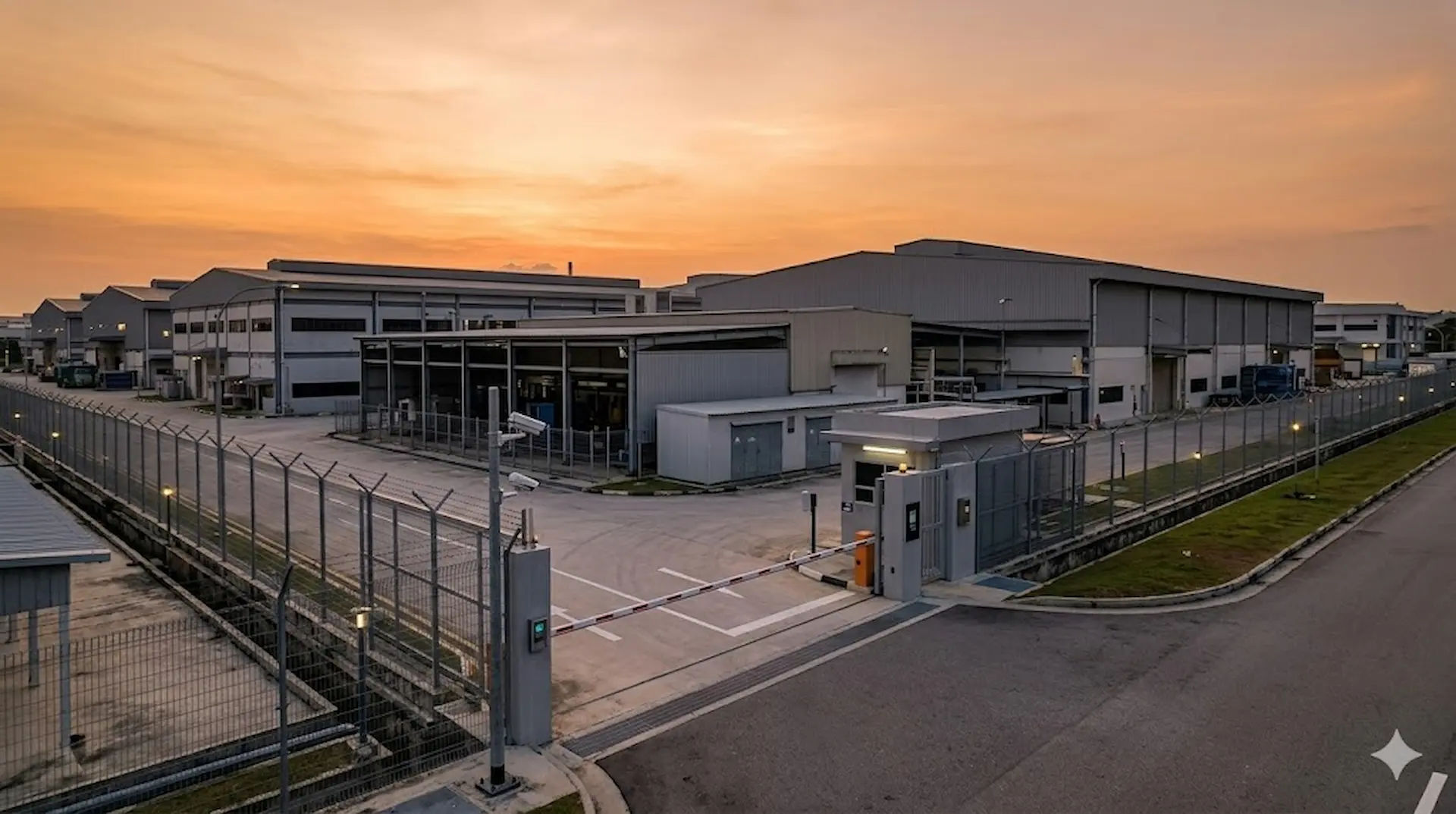
What Affects the Cost of an Industrial Security System?
Two industrial facilities of similar size may require very different solutions depending on operational complexity, compliance requirements, and existing infrastructure.
Site Size and Perimeter Length
Perimeter camera coverage and fence detection scales directly with site area. A large open-yard logistics hub requires significantly more cameras and cabling infrastructure to achieve meaningful perimeter coverage than a compact single-building factory: even at similar staff counts.
Vehicle Lane Count and Gate Complexity
Each controlled vehicle lane requires its own barrier, LPR camera, and associated cabling. Sites with multiple entry and exit points for different vehicle categories: staff, contractors, deliveries, heavy goods: require proportionally more hardware and more complex access logic configuration.
Restricted Zone Count
Each independently controlled zone: R&D lab, server room, restricted inventory area, production floor: requires its own access control hardware and credential configuration. Multi-zone sites with detailed access policies have higher access control scope than sites with simpler staff/contractor separation.
Compliance and Analytics Requirements
Sites requiring PPE compliance monitoring, no-smoking zone enforcement, or emergency mustering capability need cameras, analytics processing hardware, and platform configuration beyond standard CCTV. Whether these requirements apply to the full site or only specific zones significantly affects the analytics scope.
Existing Infrastructure
Sites with structured cabling, managed network switches, and conduit already in place can often be upgraded at significantly lower cost than sites where the entire security network needs to be built from scratch. We assess existing infrastructure reuse potential during the site survey before any scope is finalised.
Multi-Site and Centralised Management
Industrial groups with multiple facilities benefit from centralised video management and access control: a single platform covering all sites with consolidated reporting. Multi-site platform integration adds to the project scope but produces substantially better operational visibility for head office and reduces administrative overhead across all sites.
A Practitioner Observation
The most significant variable in industrial security project cost is almost always existing infrastructure: specifically the condition of cabling, the presence of managed network switches, and the availability of conduit for new runs. Sites where the network infrastructure is well-maintained and well-documented are substantially faster and cheaper to upgrade than sites where the infrastructure history is unclear. The assessment is what establishes this clearly before any scope is agreed.
Who Industrial Security Is For: and What Drives the Decision
Industrial security requirements differ significantly from commercial or residential. Here is an honest guide to when a formal engagement makes sense.
This Is For You If…
You manage or own a factory, warehouse, logistics hub, or technology park in Singapore and your security infrastructure has not been reviewed in the last five years. Your site has multiple entry and exit points for vehicles and personnel, and controlling who is on-site at any time is an operational or compliance requirement. You have had incidents involving theft of materials or equipment, unauthorised access to restricted zones, or safety violations that were not detected in time. You are expanding your facility or relocating and need to design security infrastructure into the new layout before construction begins. Your site operates around the clock or across multiple shifts and you need security systems that work reliably without constant manual supervision. You are subject to MOM, NEA, or sector-specific compliance requirements that mandate documented access control or safety monitoring.
You May Not Need This Yet If…
Your facility is a small single-unit light industrial workshop with a single entry point and a small, stable team: a basic CCTV and alarm system may be proportionate, without the need for a full access control or LPR layer. Your primary concern is office telephony: IP phone systems for industrial facilities are covered under IP Communications. You have recently completed a full security upgrade and your systems are functioning without operational gaps: annual maintenance servicing is likely all that is needed.
Safety Compliance & CCTV
Increasingly, industrial clients are using AI video analytics not only for security but for workplace safety compliance: detecting whether workers are wearing PPE, enforcing no-smoking zones, and flagging safety violations in real time. If this is a requirement at your facility, it should be scoped into the CCTV system design from the outset, not added later.
What to Prepare Before the Assessment
A site plan or layout drawing: even a rough one: showing the perimeter, entry and exit points, and key zones such as restricted areas, server rooms, and loading bays. The number of staff on-site at peak shift and the approximate number of contractor or visitor vehicles per day. Your existing security systems: CCTV, access control, alarm, barrier: brand and approximate age. Any compliance requirements or upcoming audits that have a security component. Whether the facility operates around the clock or has unmanned periods: this affects alarm monitoring requirements.
Frequently Asked Questions
Questions we hear from factory managers, facilities teams, and industrial operators evaluating security upgrades.
What security systems does a factory or warehouse typically need?
Most factories and warehouses require CCTV covering the perimeter, loading bays, production floors, and entry points; access control separating restricted zones from general areas; vehicle and gate management for delivery and staff vehicle flow; and alarm protection for high-value or restricted areas. IP telephony and network infrastructure are typically included to support communications across large floor plates. The starting point depends on the site's size, shift pattern, compliance requirements, and the specific operational risks the security system needs to address.
Can existing barriers be reused in an industrial security upgrade?
In some cases yes, depending on the barrier's condition, duty cycle rating, and integration capability. Industrial barriers handling heavy vehicle traffic are subject to high wear, and a barrier approaching the end of its rated cycle life is a liability rather than an asset. Before recommending replacement, we assess barrier condition, spare parts availability, and whether the existing controller can integrate with LPR and access control systems.
How does LPR improve industrial site security?
LPR automates the vehicle identification step at entry points: registered staff and contractor vehicles are recognised and the barrier opens without a guard needing to verify each vehicle manually. This removes the bottleneck at busy delivery periods and shift changes while maintaining a complete log of every vehicle entry and exit. Visitor and delivery vehicles that are not on the whitelist trigger a verification workflow at the guardhouse rather than automatic entry.
Can CCTV be used for PPE compliance monitoring?
Yes. AI video analytics can be configured to detect whether workers on the production floor or in specific zones are wearing required PPE: hard hats, safety vests, gloves, or eye protection: and generate alerts when violations are detected. This capability is increasingly specified by industrial operators to support WSH compliance and reduce the reliance on manual spot checks by safety officers. We design PPE monitoring into the CCTV system from the outset, as it requires specific camera positioning and analytics configuration that is difficult to retrofit.
How long does an industrial security upgrade take?
For a single-site factory or warehouse, a full access control and CCTV upgrade typically takes one to three weeks depending on the extent of cabling work, the number of controlled zones, and whether installation needs to be phased around production schedules. Larger sites with multiple buildings, significant infrastructure work, or multi-site integration take longer. We present a detailed installation schedule as part of the proposal so production and logistics teams can plan around the timeline.
What happens to site access during a network or power failure?
Access control hardware is configured with local storage and offline operating mode: controlled entry points continue to function during network interruptions. Barrier systems are connected to UPS units for short outages. For extended power failures, barriers can be configured to fail-open or fail-closed depending on the site's security requirements. We specify the appropriate fail-safe configuration for each entry point based on its risk profile during the design phase.
Can multiple industrial sites be managed from one platform?
Yes. A centralised video management and access control platform allows a security manager or operations centre to view any site, review footage, and receive alerts from a single interface. Staff credentials can be configured to be valid across multiple sites with site-specific access rules. The platform consolidates compliance reporting across all locations for head office review.
How often should industrial security systems be reviewed?
We recommend a formal review when the site expands, when operations change significantly, when compliance requirements are updated, or when the security system is more than five years old. Annual maintenance servicing covers hardware condition and software updates. A security review: examining whether the system still covers the right areas for the site's current operational risk profile: is a separate exercise and should be triggered by operational changes rather than a fixed calendar schedule.
Ready to Secure Your Industrial Facility?
Tell us about your site. We will assess your perimeter, vehicle flow, and compliance requirements: and design a system that works at the speed of your operations.
Licensed by the Police Force: Licence · Serving Singapore since 2006