Physical Security for Singapore's Critical Digital Infrastructure
We engineer physical security systems for Singapore data centres: server room access control, perimeter surveillance, and audit trail management.
Securing critical infrastructure in Singapore since 2006.
In Short
What Data Centre Physical Security Actually Needs to Do
Data centre security is about controlling access to critical infrastructure while maintaining complete auditability. Most facilities require multiple layers of access control, comprehensive surveillance, visitor management, and compliance reporting working together. The objective is not simply preventing unauthorised entry. The objective is being able to prove: at any point, to any auditor: who entered, when they entered, where they went, and what they were authorised to access.
The real test of a data centre security system is not what happens when everything works. It is what happens when something fails, when an audit is called, or when a tenant demands evidence of access segregation. A system designed for normal operation only is not adequate for this environment.
A Data Centre Is Not an Office. Its Physical Security Cannot Be Treated Like One.
The consequences of a physical security failure in a data centre: unauthorised access to a server rack, an undetected tailgate, an unlogged visitor: extend far beyond the facility itself.
Regulatory Obligations Demand an Audit Trail for Every Access Event
MAS Technology Risk Management guidelines require financial sector tenants to demonstrate physical access controls over their infrastructure. CSA's Critical Information Infrastructure framework imposes similar obligations. Every entry and exit at every zone boundary must be logged, timestamped, and retrievable on demand: not reconstructed from guard sign-in sheets.
Tailgating Is the Single Biggest Physical Security Threat
Most data centre security incidents involve authorised personnel holding doors for unauthorised ones: not forced entry. A system that cannot detect and alert on tailgating at mantrap and airlock entry points is not adequate for Tier III or Tier IV environments, regardless of how sophisticated the camera coverage is.
Multi-tenant Environments Require Zone Segregation Without Operational Friction
Colocation facilities house dozens of tenants in adjacent caged environments. Each tenant requires access to their own space: and only their space: without impeding movement for others. Managing this with separate physical key systems per tenant creates administrative overhead, audit gaps, and inevitable access exceptions that become compliance liabilities.
Common Mistakes We See in Data Centre Security Projects
After reviewing physical security environments across critical facilities, several issues appear repeatedly.
Too Much Focus on Perimeter, Too Little on Internal Zones
Many facilities invest heavily in perimeter protection: entrance barriers, security guards, CCTV at the front door: while overlooking internal zone control. Most compliance failures occur after someone has already entered the facility. The perimeter matters. But what happens inside the building, between zones, and at the cage level is where access control actually protects the infrastructure it was installed to secure.
Access Control and CCTV Not Properly Linked
Security teams can see who entered on the access log. Or they can see video of what happened. But they cannot immediately correlate the two: because the access control system and the CCTV system share no common timeline or individual identifier. That gap creates investigation delays, incomplete audit trails, and reports that cannot satisfy a MAS TRM examiner who asks to see the access record alongside the corresponding footage.
Tenant Segregation Managed Procedurally Rather Than Technically
Relying on guards, visitor logs, and escort policies alone to maintain tenant separation introduces human dependency into a process that should be enforced automatically. A policy can be bypassed. An access control system configured correctly cannot. We often find facilities where the technical segregation has been designed correctly but never tested: and where the first real test is an audit.
Documentation Treated as an Afterthought
The security system may function correctly during normal operations. But if access zone maps, equipment specifications, and access policy records are incomplete or undocumented, a compliance audit becomes a reactive exercise rather than a routine submission. Documentation should be produced as part of commissioning: not assembled under time pressure when an examiner arrives.
A Practitioner Observation
We are sometimes called in after a facility has failed an audit: not because the physical security systems were inadequate, but because the documentation was. A system that works correctly but cannot be demonstrated to work correctly through records and reports is not compliant. We treat documentation as a deliverable, not an appendix.
What Goes Into a Data Centre Security System
Physical security in a data centre is not a single perimeter: it is a sequence of access layers, each with its own controls, audit trail requirements, and failure consequences. These are the five systems we deploy.
Burglar Alarm & Intrusion Detection
Alarm systems in data centres protect the boundaries that matter most: server halls, equipment rooms, battery backup areas, and control rooms. Motion sensors, door contacts, and vibration detectors on critical enclosures generate immediate alerts on any after-hours or unauthorised access attempt. Alarm events integrate with the CCTV system to surface the corresponding camera view instantly, giving operations teams visual confirmation of the breach source without delay.
CCTV & Surveillance
24/7 surveillance with no blind spots is a baseline requirement. Camera coverage extends from the external perimeter to every internal zone boundary, corridor, cage row, and server room entry point. AI analytics detect loitering, unattended items, and unusual movement patterns. Footage retention must meet MAS TRM and tenant SLA requirements: typically 90 days minimum. Every camera event is logged and cross-referenced with the access control record to provide a complete audit trail per individual.
Intercom & Visitor Vetting
Every visitor to a data centre: contractor, vendor, or client: must be vetted before entry. Intercom at the main reception and at each zone boundary allows operations staff to verify identity and purpose before granting access, without requiring a physical escort to the door. For loading docks and delivery areas, intercom ensures deliveries are announced, logged, and escorted. Visitor records are timestamped and linked to the access credential issued for that visit.
Multi-Credential Access Control
Multiple credentials at every zone boundary is the standard: not the exception. Outer perimeter: card access. Facility entry: card plus PIN or biometric. Server room: card plus biometric plus time-window restriction. Mantrap and airlock: biometric with anti-passback and tailgating detection. Every access event is logged against a named individual: shared credentials are not permitted. Tenant zone access is configured separately, giving each tenant administrator visibility of their own zone without cross-tenant data exposure.
IP Telephony
IP phone systems connect operations centres, security posts, loading docks, and technical support areas across the data centre into a single communications network. Remote monitoring teams remain reachable on a fixed DID number regardless of physical location. For multi-site data centre operators, one IP PBX links all facilities with shared directories and call transfer: ensuring operational coordination is seamless across the portfolio without separate phone infrastructure at each site.
Network Infrastructure & Structured Cabling
Every security system in a data centre runs on IP: and the network must be as resilient as the systems it carries. Managed PoE switches with redundant uplinks ensure no single point of failure takes the security network offline. Structured cabling is installed to data centre standards: labelled, documented, and tested. VLAN segmentation isolates security traffic from tenant and operations networks on the same physical infrastructure. Network design is documented for handover to the facility's IT and operations teams.
How We Approach a Data Centre Security Project
Data centre physical security design requires a different level of engineering rigour than standard commercial or industrial projects. We treat it accordingly: beginning with compliance before specifying any hardware.
Infrastructure & Compliance Audit
We begin with a detailed review of your facility's current physical security posture against MAS TRM, CSA CII guidelines, and your tenant SLA obligations. We document every access zone, identify gaps in coverage and audit trail completeness, and produce a written gap analysis before any system is specified.
Zone-by-Zone Security Architecture
We design access control and surveillance coverage layer by layer: perimeter, facility entry, operations floor, server room, and cage level. Each zone gets its own access policy, authentication requirements, and surveillance coverage specification. Nothing is generic; everything is specific to your facility layout and tenant configuration.
Precision Installation with Zero Downtime
Data centres cannot be taken offline for installation. We work in coordination with your operations team to install and commission systems zone by zone, with all cabling, terminations, and commissioning completed without interrupting active infrastructure. All systems are tested under live conditions before handover.
Compliance Documentation & Ongoing Support
We provide full system documentation in a format suitable for MAS TRM and CSA audit submission: including access zone maps, equipment specifications, and access policy records. We remain your engineering partner for ongoing maintenance, system updates, and compliance reviews as your facility grows or regulatory requirements evolve.
Engineering Physical Security for Singapore's Critical Infrastructure
We are actively building our data centre track record in Singapore. Our current client operates a colocation facility: we are not at liberty to name it, but we can speak to the brief in a consultation.
Environment Currently Secured
Zone Access Architecture Deployed
Compliance Documentation Provided
Speak to our engineering team about a comparable project. All consultations are conducted in confidence.
Concerned Your Current Physical Security Doesn't Meet MAS TRM Requirements?
We will review your access control architecture and surveillance coverage against the guidelines: and tell you honestly what needs to change.
What Affects the Cost of a Data Centre Security System?
Facilities with similar floor areas can have vastly different costs depending on compliance requirements, zone count, and tenant configuration.
Number of Security Zones
Each zone boundary requires its own access control hardware, intercom, and surveillance coverage. A facility with four zone layers: perimeter, facility entry, operations floor, server room: requires substantially more hardware than one with two. The zone architecture is driven by compliance requirements and tenant SLA, not simply by preference.
Tenant Segregation Requirements
Colocation facilities with multiple tenants require per-tenant credential management, zone visibility partitioning, and separate reporting configurations. The complexity scales with the number of tenants and the granularity of zone separation each tenant's SLA requires. Single-tenant enterprise facilities are significantly simpler to configure.
Compliance and Retention Requirements
MAS TRM minimum footage retention of 90 days for a large camera count requires significant storage provisioning. Longer retention periods, higher-resolution cameras, and additional analytics processing increase the storage and compute specification accordingly. We size storage around your actual retention requirement and camera count: not a generic default.
Tailgating Detection Method
Video-based tailgating detection, weight-sensing floor pads, and infrared beam arrays have different cost profiles and suitability for different mantrap configurations. The right method depends on throughput volume, mantrap dimensions, and the consequence of a false positive in your operational context. We specify the method after reviewing the site: not from a product catalogue.
Existing Infrastructure
Facilities with structured cabling, managed network switches, and functioning conduit can often be upgraded at lower cost. Sites where the security network needs to be built from scratch: or where legacy analogue systems need to be fully replaced: require a more comprehensive scope. We assess existing infrastructure reuse potential before finalising any scope.
Redundancy Requirements
Data centre environments often require redundant access control controllers, redundant network uplinks, and UPS-backed security hardware to meet uptime commitments. Redundancy adds to equipment cost but is frequently a non-negotiable requirement for Tier III and Tier IV facilities where any security system outage creates both operational and compliance risk.
A Practitioner Observation
A compliance gap does not automatically require a complete system replacement. We often find that the existing hardware is adequate but the configuration, documentation, and integration between systems is not. The assessment should establish what the gap actually is before any scope is agreed. Starting with replacement rather than assessment is one of the most reliable ways to overspend.
Why Data Centre Operators Choose Securevision
Physical security for critical infrastructure requires a level of engineering precision and compliance awareness that most security integrators in Singapore do not bring to the table.
We Understand the Compliance Framework
MAS TRM and CSA CII guidelines are not marketing language for us: they are the engineering specifications we design against. We know which access control requirements apply at each zone level, what audit trail formats regulators expect, and how to document a system so that your compliance team can use it directly in their submissions.
We Design for Failure, Not Just Normal Operation
In a data centre, a single access control failure that allows an unauthorised person into a server room is a critical incident: not a minor inconvenience. We design with redundancy: backup authentication methods, anti-passback logic, tailgating alerts, and automatic lockdown triggers. The real test of a security system is not what happens when everything works: it is what happens when something fails.
Tenant Segregation Is Enforced by the System, Not by Procedure
Relying on guards and policies alone to separate tenants introduces human dependency into a process that should be automatic. We architect access credentials, zone boundaries, and platform role assignments so that tenant separation is enforced at the hardware level: audit-ready, without creating operational overhead for your facility team.
Frequently Asked Questions
Questions we regularly hear from data centre facility managers and IT infrastructure heads evaluating physical security upgrades.
Does your system meet MAS Technology Risk Management (TRM) physical security requirements?
MAS TRM Chapter 9 requires financial institutions to implement physical access controls, surveillance, and audit trails for data centre facilities. We design our systems specifically to meet these requirements: including multi-factor authentication at zone boundaries, named-individual access logging, footage retention to MAS-required minimums, and compliance documentation suitable for MAS examination. We recommend a pre-project consultation to review your specific obligations before design begins.
Can you integrate with our existing Building Management System (BMS)?
Yes, in most cases. Our platform supports integration with major BMS protocols including BACnet and Modbus. The specific integration scope depends on your BMS vendor and what you need to pass between systems: typically alarm triggers, access events, and environmental alerts. We assess integration feasibility during the audit phase at no cost.
How do you handle tailgating detection at mantrap and airlock entry points?
Tailgating detection is handled at the hardware level using weight-sensing floor pads, infrared beam arrays, or video-based detection at mantrap controllers: not by camera analytics alone. When a tailgate is detected, the system can trigger an immediate alert, lock the exit door until the event is reviewed, and log the incident with associated camera footage. We specify the detection method based on your throughput requirements and mantrap dimensions.
How do you manage access for multiple tenants without creating visibility across tenants?
The platform uses role-based access architecture. Each tenant administrator sees only their own zone access events: not those of adjacent tenants. Facility administrators see the full picture. Tenant views can be configured to show access logs, generate reports, and receive alerts for their zones without any cross-tenant data visibility. This architecture is documented for tenant SLA and compliance purposes.
What retention period do your systems support for surveillance footage?
Our NVR configurations support footage retention from 30 days to 365 days depending on storage specification. MAS TRM typically requires 90 days minimum for financial sector facilities. We design storage capacity around your retention requirement and expected camera count: not a generic default. Retention settings are documented and can be audited.
Can your system generate the access reports needed for internal and external audits?
Yes. The platform generates named-individual access event reports, filterable by zone, time window, and individual. Reports can be exported in PDF or CSV format for internal security reviews, MAS TRM submissions, or tenant SLA reporting. We configure the reporting templates during commissioning and train your team on how to run scheduled and on-demand reports.
We Also Work With
Our engineering approach in data centre environments extends across Singapore's most demanding built environments.
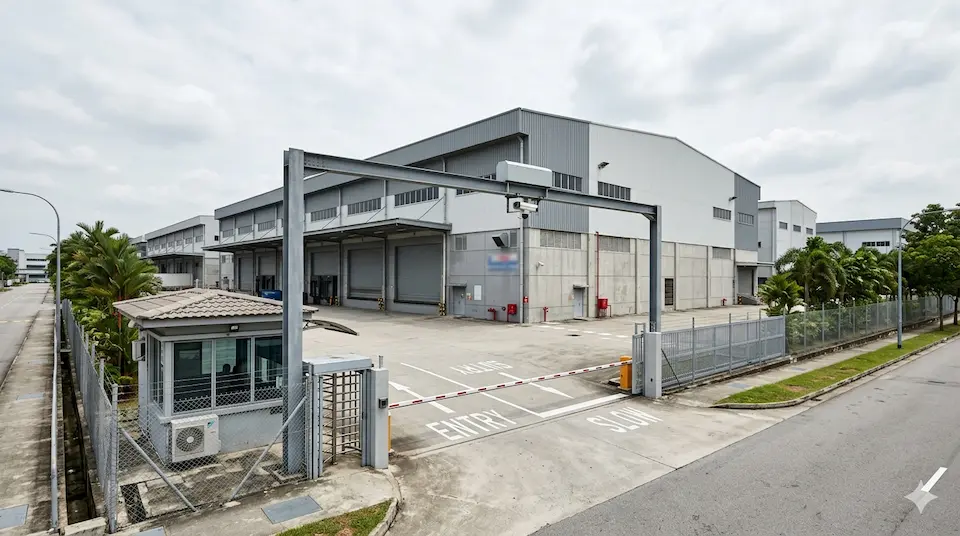
Industrial
Factories, tech parks, and logistics hubs share the perimeter security and access control complexity of data centre environments: at a different compliance level but similar operational scale.
View Industrial Solutions →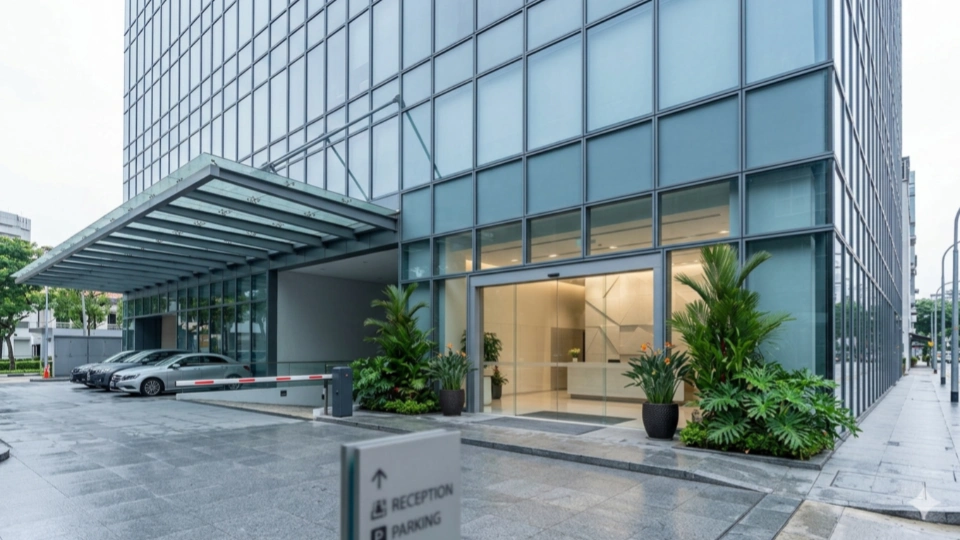
Commercial
Office headquarters and financial sector buildings increasingly require data centre-grade physical security for their server rooms and IT infrastructure floors.
View Commercial Solutions →
Institutions
Government facilities and statutory boards operate under CSA CII obligations similar to those facing data centre operators in critical sectors.
View Institutional Solutions →
Ready to Secure Your Data Centre?
Tell us about your facility. We will review your access architecture, identify compliance gaps, and design a system built for audit-readiness from day one.
Licensed by the Police Force: Licence · Serving Singapore since 2006