- Most false alarms are not caused by burglars; they have logical explanations that can be found and fixed.
- User error remains one of the most common causes, from forgotten disarming to unannounced visitors.
- Environmental changes after installation; renovation, change of room use, new furniture; are a major and often overlooked cause.
- Sunlight, moving air, pets, and even geckos can trigger PIR detectors if the system was not designed with those factors in mind.
- Poor detector placement is the single most correctable cause of recurring false alarms.
- Modern detector technology, including pet immunity and cross-zoning; has significantly reduced false alarm rates compared to older systems.
When the Alarm Goes Off But Nothing Happened
In the previous article, I explained why false alarms matter; the cost to monitoring centres, police resources, and the trust that holds the whole system together. This article goes into what actually causes them.
The most common question homeowners ask after an unexplained alarm activation is why the alarm went off when nobody broke in. The short answer is that an alarm system can only react to what it detects. It cannot always determine why it detected something.
Over the years, I have seen false alarms caused by family members, contractors, pets, geckos, sunlight, air-conditioning, open windows, standing fans, faulty batteries, and poor detector placement. In most cases there is a logical explanation. The challenge is finding it, and fixing the right thing rather than replacing perfectly good equipment.
KEY POINT
When an alarm activates repeatedly without obvious cause, the system is almost always detecting something real. The question is not whether the detector is working; it is what the detector is reacting to and why.
User Error Is Still the Biggest Cause
After more than three decades in the industry, user error remains near the top of the list. It accounts for a significant proportion of alarm activations that monitoring centres handle every day.
The most common forms are straightforward: forgetting to disarm before entering, entering through the wrong door, letting a family member in without telling others the system is armed, allowing contractors to work after hours, or simply forgetting the system was set. These situations are usually easy to resolve once identified, but they happen far more often than most property owners realise.
The practical fix is not more sophisticated technology. It is clearer user training at the point of handover and a consistent arming and disarming routine. An alarm system that is difficult or confusing to use will generate more user-error activations, regardless of how good the equipment is.
PLANNING POINT
When a new alarm system is installed, every person who will use it should be walked through the arming and disarming procedure, not just the primary user. A family member or regular visitor who does not know the routine is a false alarm waiting to happen.
The Afternoon Sun Problem
This one surprises many homeowners. The alarm works perfectly for months and then suddenly starts activating at roughly the same time every afternoon.
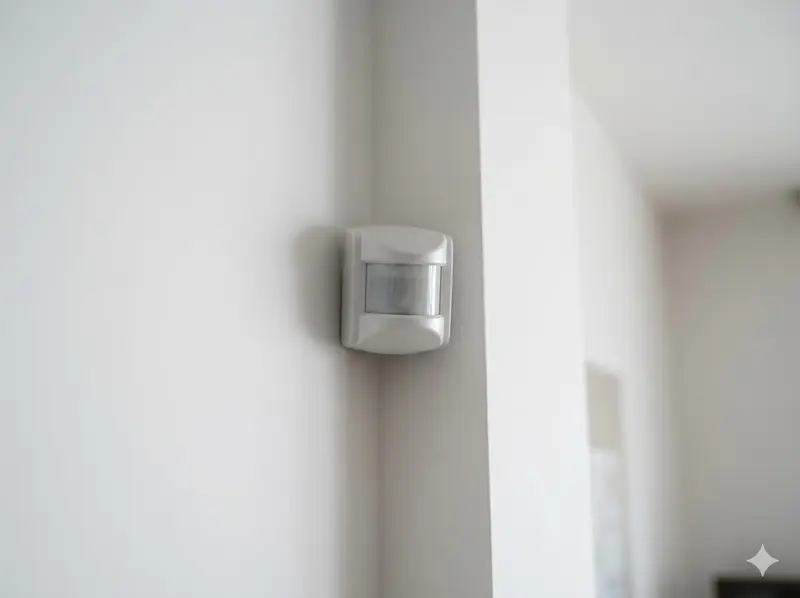
The culprit is often sunlight. Most motion detectors use Passive Infrared technology; PIR. A PIR detector does not see movement the way a CCTV camera does. It detects changes in infrared energy, which is essentially heat. If direct sunlight strikes the detector or creates sudden temperature changes within its detection area, the detector can trigger even though nobody is there.
The detector is not faulty. It is reacting exactly as designed, to a heat change. The problem is placement. A detector aimed at a west-facing window will behave differently in the morning than in the afternoon when the sun moves into its field of view. This is one of the most common placement errors I see, and one of the most avoidable.
DESIGN RULE
Before finalising detector positions, think about sun angles at different times of day. A detector that works perfectly at 9am may false-alarm at 4pm when afternoon sun reaches the window behind it. Walk the site at different times before installation if possible.
When the Environment Changes After Installation
Moving air and temperature changes are a common trigger. Air-conditioning vents, ceiling fans, standing fans, and sudden heat sources can all affect PIR detectors if they sit in the path of airflow or temperature change.
But the deeper cause behind many of these incidents is something more fundamental; a change in the environment after the system was installed.
The first question I ask on any false alarm callback is whether anything in the room has changed. Nine times out of ten, something has. A new fan placed under a detector. A wall removed during renovation. A bedroom converted into a home office with different occupancy patterns. A storage room turned into a workspace with people moving through it at all hours.
The original alarm design was correct for the original environment. The environment changed and the alarm design did not. That mismatch is what generates the false alarm, not a faulty detector and not a faulty panel.
This is worth keeping in mind any time you renovate, reconfigure a space, or change how a room is used. If the change is significant, the alarm system should be reviewed to match the new layout and use.
PLANNING POINT
Renovation is one of the most common triggers for recurring false alarms in Singapore properties. If you are planning a renovation that affects room layouts, ceiling heights, or how spaces are used, include your alarm installer in the planning conversation, not as an afterthought once the work is done.
The Tiny Intruders Nobody Thinks About
Not all intruders are human. In Singapore, geckos have earned a reputation for appearing where they are least welcome, including directly in front of PIR detectors.
Depending on the detector type, its sensitivity settings, and where it is mounted, small animals can trigger activations. Over the years I have seen issues involving geckos, rodents, birds, cats, and dogs. A gecko crawling across the face of a detector is a reliable way to set off an alarm at 3am.
This is one reason modern detectors include pet immunity features; the sensor is designed to ignore heat signatures below a certain height or weight threshold, so a cat on the floor does not trigger the same response as a person walking through the room. If pets are present, specifying a detector with pet immunity is not optional; it is basic system design.
DESIGN RULE
In Singapore, geckos are a genuine false alarm risk for any PIR sensor mounted at low height or near walls and ceilings where geckos move. Mount detectors away from surfaces geckos typically travel across, and specify pet-immune units where animals are present.
Open Windows and Moving Curtains
A homeowner leaves a window open. A strong breeze enters. Curtains begin moving. The detector sees movement. The alarm activates. The homeowner insists nobody entered the property. They are absolutely right; nobody did. The curtains became the unexpected intruder.
This is more common than it sounds, particularly in Singapore homes where windows are often left open for ventilation and where heavy curtains or vertical blinds are standard. The fix is usually straightforward; either close the window before arming, or reposition the detector so it does not have line of sight to the curtain movement. The system is not wrong. The environment needs to be managed.
KEY POINT
Any object that moves within a detector's field of view is a potential false alarm source. Curtains, plants near air-conditioning vents, hanging decorations, and even ceiling fans within detection range have all caused activations. Map the detector's field of view during installation and remove or reposition anything that moves within it.
Low Batteries and Equipment Faults
Equipment faults are less common than most people assume, but they do occur. Ageing detectors, weak backup batteries, damaged wiring, and faulty power supplies can all generate unexpected activations or erratic system behaviour.
The good news is that modern alarm systems are designed to give warning before complete failure. Low battery alerts, tamper signals, and communication fault notifications are standard on most current panels. These early warnings exist precisely so that minor issues can be addressed before they become false alarm events.
This is one reason regular maintenance remains important. A system that is never checked will accumulate small degradations; a weakening battery here, a slightly loose detector there, that eventually contribute to unexplained activations. Addressing them proactively is far cheaper than investigating a false alarm after the fact.
PLANNING POINT
Schedule an annual maintenance check for your alarm system. It does not take long and it catches the small issues; low batteries, loose terminals, detector drift; before they generate false alarms or, worse, affect system performance during a genuine event.
Poor Design Creates Long-Term Problems
Many false alarms begin not at the moment of activation, but during the design stage; sometimes years before the first alarm fires.
Choosing the wrong detector type for the environment, installing detectors in locations that were never suitable, ignoring environmental conditions during the site survey, and poor zone planning all create conditions where false activations are almost inevitable over time. The equipment itself may be perfectly serviceable. The design was simply not suited to the environment it was placed in.
I often tell customers that the best alarm equipment in the world cannot compensate for poor design. A dual-technology sensor in the wrong location will still cause problems. A standard PIR correctly placed will not. The sensor matters. Where you put it matters more.
DESIGN RULE
Before replacing any detector that is causing false alarms, establish why it is activating. In most cases the cause is placement or environment, not the device itself. Replacing the detector without changing its position almost always produces the same result.
Why Modern Detectors Are More Reliable
Many of the false alarm stories from years ago involved older PIR detectors. These were effective for their time but considerably less sophisticated than what is available today.
Older detectors primarily reacted to changes in heat patterns with limited ability to distinguish between environmental noise and genuine movement. Modern detectors are significantly more capable. They analyse movement patterns, apply signal processing to filter out common false alarm triggers, and can distinguish between a person walking through a room and a pet moving along the floor.
Alarm panels have also improved. Cross-zoning, where the system requires confirmation from two detectors in the same area within a set time window before generating an alarm; reduces the chance of a single environmental trigger causing a false activation. The result is that today's alarm systems are generally far more reliable than those installed twenty or thirty years ago, even in challenging environments.
We will look at these advances in more detail in the next article.
KEY POINT
If your alarm system is more than ten years old and generating persistent false alarms, the issue may not be placement or environment; it may simply be that the technology has been overtaken. Older single-technology PIR sensors in particular have been largely superseded by more capable alternatives.
Finding the Real Cause
When an alarm generates repeated false activations, the instinct is often to assume the equipment is faulty and replace it. In most cases that is the wrong starting point.
The alarm system is almost always detecting something real. The question is what, and why. A systematic approach works better than guesswork: check when the activations occur, which zone is triggering, what is in that zone, what has changed recently, and what environmental conditions exist at the time of activation. Most false alarm causes reveal themselves quickly under that kind of structured review.
Experience matters here. An engineer who has seen the same false alarm patterns across hundreds of installations will identify the cause faster than someone working through a checklist for the first time. The fix is usually straightforward once the cause is correctly identified; a repositioned detector, an updated zone programme, a user briefing, or a maintenance task. What takes time is the diagnosis, not the repair.
Securevision Verdict
Most false alarms are preventable. The key is understanding what caused the alarm in the first place, not assuming the equipment is at fault and replacing it.
In the vast majority of cases, the issue is the environment, the installation, or the way the system is being used. A properly designed and maintained alarm system should be a trusted security tool. Because when a genuine alarm occurs, you want complete confidence that the system is telling you something important, and that the people responsible for responding will take it seriously.
In Short
Most false alarms are preventable. The causes are rarely mysterious; user error, environmental triggers, detector placement issues, and maintenance shortfalls account for the vast majority. A system that generates false alarms consistently is not malfunctioning in an unresolvable way; it is signalling that something in the installation, configuration, or maintenance needs attention. Finding and addressing the specific cause is almost always more cost-effective than simply accepting false alarms as an unavoidable feature of having an alarm system.

Frequently asked questions
What causes false alarms in burglar alarm systems?
The most common causes are user error (forgetting to disarm in time or arming with a window open), detector placement issues (PIR facing a window with sunlight or an air conditioning vent), environmental factors (insects, moving curtains, pets), low battery conditions in wireless detectors, and equipment faults in detectors or wiring. Most false alarms have a specific, identifiable cause that can be addressed.
How can I reduce false alarms from my burglar alarm?
Start by identifying the specific cause. Check the panel log to see which zone triggered and at what time. If it is consistently the same zone, investigate the detector in that zone; its placement, the environment around it, and its condition. If the cause is user error, review the arming and disarming procedure. If a detector is generating repeated false activations without an identifiable environmental cause, arrange for it to be tested or replaced.
Can sunlight cause a burglar alarm to trigger?
Yes. Direct sunlight or rapid changes in sunlight, such as clouds passing; can cause PIR detectors to trigger because they sense the sudden change in infrared radiation as movement. This is one of the most common environmental false alarm causes. The solution is to reposition the detector away from direct sunlight exposure or replace it with a dual-technology detector that requires both PIR and microwave activation.
Can insects cause a false alarm?
Yes. Small insects; particularly spiders; are a surprisingly common cause of false alarms. A spider walking directly across the face of a PIR detector lens can be detected as movement. Insects inside the detector housing can also trigger the sensor. Regular cleaning of detector lenses and ensuring detectors are sealed against insect ingress reduces this problem significantly.
Can pets trigger a burglar alarm?
Yes; unless the detectors have been configured with pet immunity. Standard PIR detectors respond to any heat-emitting moving object, including cats and dogs. Pet-immune PIR detectors use a combination of sensitivity settings and detection angle design to reduce the likelihood of triggering from animals below a certain height or mass. If your alarm triggers when your pet moves around, ask your installer about pet-immune detector options.
What is user error in alarm systems and how common is it?
User error; arming or disarming incorrectly, or failing to disarm within the entry delay period; is the most common single cause of false alarms. It is particularly common in the first few weeks after a new system is installed, when users are still learning the system's behaviour. Ensuring the entry and exit delays are set to practical durations, and that all regular users are properly briefed, significantly reduces user error activations.
Can an air conditioning unit cause a false alarm?
Yes. PIR detectors placed near air conditioning vents or units can trigger when the airflow changes, particularly if the air conditioning produces rapid temperature changes near the detector. Repositioning the detector away from the airflow path is the most effective solution. In some cases, changing to a dual-technology detector resolves the problem without moving the detector.
Why does my alarm trigger when I'm not home?
If the alarm is triggering during armed periods when nobody is present, review the panel log to identify which zone is activating and at what time. Common causes include sunlight patterns at specific times of day, HVAC systems cycling on, open windows allowing curtain movement, or insects in detectors. A pattern in the timing or location of false activations usually points to the specific cause.
What does a low battery in an alarm detector cause?
A wireless detector with a low battery may generate erratic signals, trigger false alarms, or fail to trigger when an intrusion occurs. Most modern wireless detectors send a low battery warning to the panel before the battery reaches a critical level. This warning should be acted on promptly; replacing the battery in a wireless detector is a simple maintenance task that prevents both false alarms and detection gaps.
How do I find out what caused a false alarm?
Most alarm panels maintain an event log that records which zone triggered, at what time, and the alarm condition. Your installer or monitoring centre can access this log to help identify the pattern. A professional inspection of the triggering zone; examining detector placement, environmental conditions, and detector condition; will usually identify the specific cause.
Can false alarms affect my relationship with the police or monitoring centre?
Yes. Repeated false alarms can result in deprioritised police response to your property. Singapore Police Force guidelines address alarm management, and properties with high false alarm rates may receive lower response priority. Monitoring centres may also charge additional fees for repeated unnecessary call-outs. Addressing false alarm causes promptly protects both the security response capability and the relationship with the relevant authorities.