- False alarms are one of the biggest challenges facing alarm system owners, monitoring centres and emergency responders.
- Every alarm must initially be treated as genuine until proven otherwise; this is what makes false alarms costly.
- The real danger of false alarms is not the inconvenience; it is the loss of trust that builds up over time.
- Singapore's SS 558 standard and licensing requirements place responsibility on security providers to manage false alarms responsibly.
- Most false alarms trace back to one of three causes: poor system design, poor installation, or user error, not faulty equipment.
- A well-designed, professionally installed and properly maintained alarm system should be trusted every time it activates.
Not Every Alarm Is an Emergency
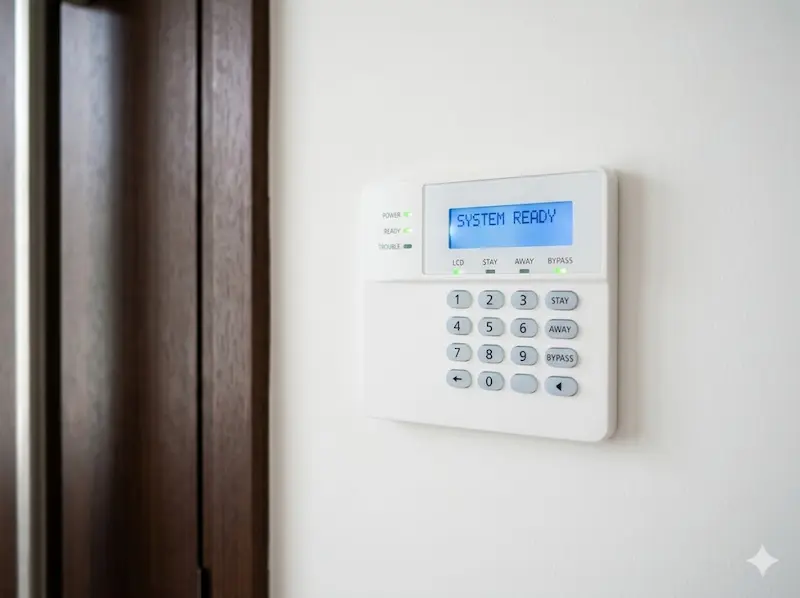
When most people think about burglar alarms, they imagine a break-in. A door is forced open. A burglar enters the property. The alarm activates.
In reality, that is only one of many reasons why an alarm may trigger. Over the years, I have seen alarms activated by homeowners forgetting to disarm the system, family members entering unexpectedly, contractors working after hours, cleaning staff, pets, faulty detectors, power interruptions, open windows, and incorrect detector placement.
The alarm system does not know the difference. It simply reports what it detects. That is why alarm verification is such an important part of the process, and why false alarms carry more weight than most people realise.
KEY POINT
The alarm system cannot distinguish between a burglar and a cleaner. Every signal looks the same to the panel. The work of determining what actually happened falls entirely on the monitoring centre, and that work takes time and resources, whether the alarm is genuine or not.
Every Alarm Must Be Taken Seriously
One lesson I learned from operating Central Monitoring Stations is that every alarm must initially be treated as genuine. The operator receiving the signal does not know whether it is a burglar, a cleaner, or a faulty detector. At that point, it is simply an alarm event.
The job of the monitoring centre is to determine what happened and what action should be taken. This is why operators contact keyholders, verify information and follow a set of agreed response steps before escalating. The objective is to respond quickly to genuine emergencies while avoiding unnecessary deployment of resources.
That balance is harder to maintain than it sounds, especially when false alarms make up a significant proportion of the signals received every day.
KEY POINT
Treating every alarm as genuine is not a choice; it is a professional requirement. The cost of missing a real intrusion is far greater than the cost of verifying a false one. That asymmetry is why monitoring centres never assume.
False Alarms Affect More People Than You Think
Many homeowners assume that a false alarm is merely an inconvenience. In reality, the impact extends much further across three groups of people.
For the homeowner, false alarms interrupt sleep, cause unnecessary anxiety, create inconvenience, and; most seriously; reduce confidence in the system. After enough false alarms, some homeowners begin to ignore alarm notifications altogether. That becomes dangerous when a genuine intrusion eventually occurs.
For the monitoring centre, every false alarm still requires real work. Operators must review the alarm, check account information, contact keyholders, follow verification procedures, and record the incident. Even when no emergency exists, the same process runs; consuming operator time and attention that could be directed at genuine events.
For the police, if a response is requested, officers must attend and assess the situation. Resources are diverted from other duties. Every unnecessary dispatch is time and manpower that could have been used elsewhere. Over time, repeated false dispatches from the same account affect how that account is treated.
PLANNING POINT
A false alarm is not free. Someone always pays, in time, in resources, or in credibility. The cost is just distributed across people who may never complain directly to the property owner.
The Boy Who Cried Wolf Problem
The greatest danger of false alarms is not the inconvenience. It is the loss of trust.
When an alarm system generates too many false alarms, people stop believing it. Homeowners stop paying attention. Staff assume the alarm is another mistake. Managers tell people to ignore it. The system slowly loses its credibility, and with it, its entire purpose.
This is exactly the lesson from the story of the boy who cried wolf. The first alarm is taken seriously. The tenth false alarm may not be. And the one time it is a genuine emergency, nobody responds.
I have seen this happen in real installations. A system that false-alarmed repeatedly was eventually switched off entirely by the homeowner. A few months later, there was a genuine break-in. The alarm was not there to catch it.
KEY POINT
The most dangerous alarm system is not one that occasionally misses an event. It is one that generates so many false alarms that nobody believes it anymore. Trust, once lost, is very hard to rebuild.
Singapore's Approach to False Alarm Management
In Singapore, alarm system design and installation is governed by SS 558; the Singapore Standard for the construction, installation, operation and maintenance of intruder alarm systems. One of the objectives of SS 558 is to ensure that alarm systems are designed and maintained in a way that minimises unnecessary activations.
Singapore's licensing requirements for security service providers place responsibility on alarm companies to manage false alarm rates responsibly. Monitoring centres are expected to exercise good judgement and complete verification before requesting police attendance. Repeated unnecessary activations reflect on the account and affect how future alarms are treated by both the monitoring centre and the police.
SINGAPORE CONTEXT
SS 558 is not just a technical standard; it sets expectations for how alarm systems should behave in the real world. A system that generates persistent false alarms is not just a nuisance; it is a system that is not meeting the standard it was installed to meet.
Why Alarm Sirens Stop After a While
Many homeowners assume that if an alarm activates, the siren should continue sounding indefinitely. Alarm systems are intentionally programmed not to do this.
One of the objectives of SS 558 is to prevent unnecessary public nuisance. Imagine an alarm activating at 2am because of a false alarm and continuing to sound for hours while the homeowner is overseas. The surrounding community would be severely disrupted for an event that turned out to be nothing.
This is why alarm sirens are typically programmed to cut off automatically after a set time, typically between 5 and 15 minutes depending on the system programming and site requirements. The alarm condition itself still exists. The monitoring centre still receives the signal. The panel still records the event. The siren simply stops sounding.
The objective is to balance the need to alert neighbours and deter intruders with consideration for the surrounding community. A siren that runs indefinitely serves neither goal well.
KEY POINT
A silent alarm panel is not a deactivated alarm. The monitoring centre is still watching, the event is still recorded, and the response process is still running. The siren cutoff is a community consideration, not a security failure.
What Causes Most False Alarms?
After decades in the security industry, I have found that most false alarms trace back to one of three causes, and in most cases, the alarm equipment itself is not the problem.
Poor system design accounts for a large proportion. The wrong detector selected for the environment, poor zone planning, and incorrect protection strategy all create conditions where false activations are almost inevitable. A PIR sensor aimed at a west-facing window will false-alarm on sunny afternoons. That is a design failure, not an equipment failure.
Poor installation is the second cause. Even a well-specified system can perform badly if the detectors are positioned incorrectly, if environmental influences were not considered during installation, or if the panel was not programmed properly for the site conditions.
User error accounts for the remainder. Forgotten disarming procedures, unannounced visitors, contractors entering after hours, and changes to how the property is used; all of these create alarm activations that no amount of equipment quality can prevent. This is why proper user training at the point of handover matters as much as the quality of the installation itself.
DESIGN RULE
Before replacing any detector that is causing false alarms, establish why it is activating. In most cases the cause is placement or environment, not the device itself. Replacing the detector without changing its position usually produces the same result.
Reducing False Alarms, and Closing the Loop
Technology has helped significantly. Video verification; covered in the previous article in this series; allows monitoring operators to review camera footage at the moment an alarm fires. Instead of relying solely on a zone signal, the operator can see what triggered the detector. That single change has reduced unnecessary dispatches substantially in installations where it has been implemented.
But technology is only part of the answer. The articles in this series, from alarm system design through detector selection, panel specification, monitoring operations, and response procedures; all connect back to the same underlying principle: a well-designed, professionally installed, and properly maintained alarm system generates fewer false alarms and earns the trust of everyone who depends on it.
Singapore introduced licensing requirements for security service providers partly for this reason. A properly designed and installed alarm system should not become a nuisance. It should become a reliable tool that responds when it matters and stays quiet when it should.
Securevision Verdict
During my years helping to operate monitoring centres handling tens of thousands of alarm accounts, one lesson became very clear. Every false alarm has a cost, in time, in resources, and in the trust that holds the entire system together.
A good alarm system should be trusted every time it activates. That trust is built through proper design, professional installation, regular maintenance, and responsible alarm management. Because when a genuine emergency occurs, the alarm system must do the one thing it was designed to do; get people to pay attention.
In Short
False alarms are not an unavoidable cost of having a burglar alarm; they are a signal that something in the system, the installation, or the user's routine needs attention. The consequences extend beyond inconvenience: repeated false alarms erode the confidence of keyholders, desensitise neighbours, and can affect the priority with which the police respond to future activations. Managing false alarms is not an afterthought; it is part of operating an alarm system responsibly.

Frequently asked questions
What is a false alarm in a burglar alarm system?
A false alarm is an alarm activation that occurs in the absence of an actual intrusion or the specific emergency condition the system was designed to detect. False alarms can be caused by user error, environmental factors, equipment faults, or poor installation. They are not inherently dangerous, but they waste the time of monitoring centres, keyholders, and emergency services, and reduce the credibility of the alarm system over time.
What are the most common causes of false alarms?
The most common causes are: user error (failing to disarm within the entry delay, or arming with a door or window open); environmental triggers (direct sunlight on a PIR detector, air conditioning airflow, moving curtains); insects or small animals triggering motion detectors; low batteries in wireless detectors; and equipment faults including worn contacts or deteriorating detector components.
How do false alarms affect police response in Singapore?
Singapore Police Force guidelines address alarm management, and properties with a high frequency of false activations may receive deprioritised response. This means that when a genuine intrusion occurs at a property known for repeated false alarms, the response may be slower than for a property with a clean activation history. Managing false alarms proactively protects the quality of police response when it is genuinely needed.
What is the boy-who-cried-wolf problem in alarm systems?
The boy-who-cried-wolf problem refers to the desensitisation that occurs when an alarm generates repeated false activations. Keyholders who have attended multiple false alarms begin to assume that any new activation is also false, and may delay their response or not attend at all. Neighbours who have heard the siren many times stop paying attention to it. This erosion of response reliability is one of the most serious long-term consequences of unmanaged false alarms.
Can I be fined for repeated false alarms from my burglar alarm?
Regulations in Singapore address nuisance from alarm systems, and persistent false alarms that cause disturbance to neighbours or unnecessarily engage emergency services can attract complaints and potentially regulatory attention. Your monitoring centre may also charge additional fees for repeated unnecessary call-outs. Addressing false alarm causes promptly is both a practical and a legal responsibility.
How long does a burglar alarm siren ring before it stops?
Alarm sirens in Singapore are typically configured with a self-cut-off timer that stops the audible output after a set period; commonly between 3 and 10 minutes. This is a deliberate design feature to prevent prolonged noise disturbance. The alarm system continues to operate and communicate with the monitoring centre after the siren cuts off; only the audible output stops.
What should I do after my alarm generates a false activation?
Log the event: note the time, the zone that triggered, and any circumstances you are aware of. Check the panel event log if accessible. Review whether anything changed in the environment around the triggering detector; new furniture, direct sunlight at that time of day, a window that was left open. If you cannot identify the cause, contact your alarm installer to inspect the relevant zone. Recurring false alarms from the same zone should always be investigated.
Can a pet trigger a burglar alarm?
Yes. Standard PIR detectors respond to any heat-emitting moving object. Pets; particularly cats and dogs that move around freely; can trigger standard PIR detectors. Pet-immune detectors are available and are configured to reduce sensitivity to objects below a certain size or heat signature. If your alarm is triggering when your pet moves around during an armed period, ask your installer about pet-immune detector options.
What is an entry delay and how does it affect false alarms?
The entry delay is the period between a door or window contact triggering and the alarm sounding, allowing an authorised person to enter and disarm before the siren activates. If the entry delay is too short, it is easily exceeded by someone who is slightly delayed, generating a false alarm. If it is too long, it creates a security gap. Setting the entry delay to a practical duration for regular users significantly reduces false alarms from user error.
How do I reduce false alarms from my alarm system?
The most effective steps are: ensure all users understand the arming and disarming procedure and the entry and exit delay durations; check the placement of PIR detectors and ensure none face direct sunlight, air conditioning vents, or areas frequented by pets; replace the backup battery if it has not been changed in the last three to five years; arrange an annual service inspection; and investigate any zone that generates more than one false activation to find and address the specific cause.