- Alarm monitoring existed long before broadband internet and mobile apps, and it worked reliably across thousands of properties.
- Early alarm systems communicated with monitoring centres using ordinary telephone lines and a built-in component called a dialler.
- The alarm panel transmitted coded signals using standardised protocols; Contact ID being the most widely adopted, which the monitoring centre decoded and acted on.
- Keeping the communication path reliable was as important as the alarm itself; line supervision, polling and cellular backup were developed specifically to address this.
- Many of the monitoring principles used today were established during the telephone line era.
- Modern IP monitoring is faster and richer, but the fundamental process; detect, communicate, verify, respond; has not changed.
Life Before Mobile Apps
Today, if your alarm activates, you probably expect a push notification on your phone, a clip from the CCTV camera nearest the triggered zone, and a call from the monitoring centre; all within a few minutes. That feels normal now.
But when I first entered the security industry in the late 1980s, we did not have smartphones, cloud platforms, broadband connections, or mobile applications. Yet alarm monitoring was already operating successfully across thousands of homes, offices and commercial buildings in Singapore. Monitoring centres were staffed around the clock. Operators were responding to alarm events from properties across the city. Systems were protecting real people and real assets.
So how did it work?
KEY POINT
The absence of modern technology did not mean the absence of effective monitoring. The principles were sound. The tools were simply different, and understanding those tools helps explain why modern systems are designed the way they are.
The Telephone Line Was Everything
Before IP networks became practical, monitored alarm systems relied on the ordinary telephone line; the same PSTN line used to make voice calls.
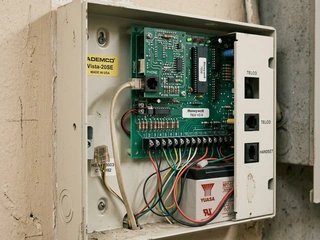
Every alarm panel contained a built-in communicator, commonly called a dialler. When an alarm occurred, the panel would seize the telephone line; taking control of it, even if a call was already in progress, and dial the monitoring centre's dedicated receiving number. The process was functionally similar to making a phone call, except that instead of a person speaking, the alarm panel transmitted a coded message that the monitoring centre's receiver could decode.
That message told the monitoring centre precisely what had happened, which property, which zone, what type of event. The speed was not instantaneous by today's standards. A typical transmission took anywhere from 15 to 45 seconds to complete. But for its time, it was reliable, widely available, and cost-effective. The telephone network already reached almost every property in Singapore. The alarm industry simply made use of infrastructure that was already everywhere.
KEY POINT
The dialler was not sophisticated by modern standards. But its simplicity was its strength; it used infrastructure that was already everywhere, and it did one job reliably. That combination made it the foundation of alarm monitoring for two decades.
What the Alarm Panel Actually Sent
Many people imagine the alarm panel sending something like a voice message; a recorded announcement saying "front door alarm at 123 Main Street." That is not how it worked.
The alarm panel transmitted data using a standardised signalling format. The most widely adopted of these was a protocol called Contact ID, developed in the early 1990s and quickly adopted across the industry as a common language between alarm panels and monitoring receivers.
A Contact ID message is a short burst of audio tones; similar in character to the tones a fax machine produces when connecting. Each tone sequence encodes specific information: the account number identifying the property, a code identifying the type of event, and the zone number indicating where in the property the event occurred. A typical decoded message might read: account 12345, intrusion alarm, zone 3. The monitoring centre's receiver decoded that message automatically and displayed it on the operator's screen alongside the stored account information; the customer's name, address, contact persons, and response instructions.
To the homeowner, the process was invisible. Behind the scenes, a precisely structured data exchange had taken place in under a minute. Contact ID became the industry standard because it was simple, reliable, and universally understood; most alarm panels manufactured from the 1990s onwards supported it as a default, and many still do today.
KEY POINT
Standardised signalling protocols like Contact ID were what made large-scale monitoring possible. Without a common language between panels from different manufacturers and receivers at different monitoring centres, scaling alarm monitoring to thousands of accounts would have been impractical.
The Central Monitoring Station
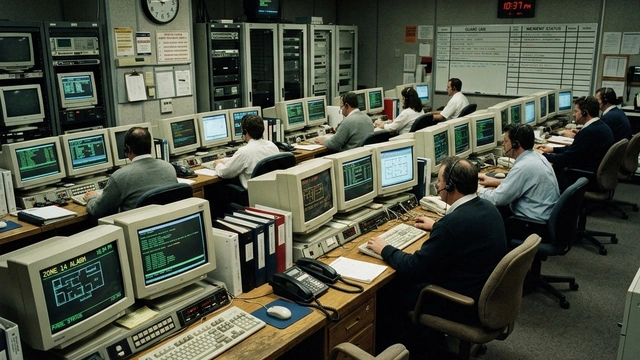
At the other end of the telephone line sat the Central Monitoring Station; the CMS. This was a dedicated facility, staffed 24 hours a day, 365 days a year, built around the incoming signal flow. Banks of receiving equipment decoded incoming transmissions. Operator workstations displayed the decoded events alongside the account database that matched every incoming signal to a specific property and a specific set of response instructions.
When I was involved in setting up and operating monitoring centres for ADT and Optimax, we were handling tens of thousands of accounts. The volume of incoming signals on any given day was substantial, and the vast majority were not genuine intrusions. Power failures, low batteries, user errors, communication faults; all of these generated signals that required assessment and response. The operator's job was to process each signal correctly and quickly: review the event type, check the zone, look at recent history on the account, call the contact list, follow the response procedure, log the outcome.
All of this happened for every signal, every time; whether it was 3pm on a Tuesday or 3am on a Sunday morning. The technology has evolved significantly since then. The discipline required of the people operating the centre has not.
KEY POINT
The quality of a monitoring centre depends on its people as much as its technology. Fast receiving equipment and a large account database mean nothing if the operators are not trained and disciplined enough to use that information effectively under pressure.
The Line-Cut Problem, and How the Industry Solved It
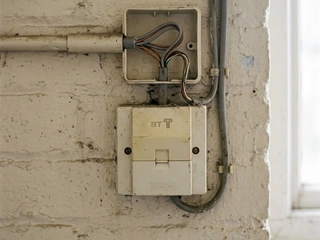
One vulnerability was always present in the telephone line model, and it was not a secret: the communication path could be disrupted. A line fault could take out a legitimate installation by accident. A more determined intruder might cut the telephone line deliberately before attempting entry, knowing that the alarm panel could not communicate with the monitoring centre. It was a genuine attack vector, and the industry worked hard to address it.
Line supervision was one of the first solutions. The monitoring centre would periodically send a test signal to the alarm panel, and the panel would respond. If the panel did not respond within the expected window, the monitoring centre treated it as a potential incident rather than waiting for an alarm that might never arrive.
Polling took this further. Rather than the monitoring centre initiating the test, the alarm panel regularly reported in; a brief check-in signal at defined intervals confirming the communication path was intact. If the monitoring centre did not receive the expected poll, the account was flagged for investigation. This turned alarm monitoring from a passive receiver into an active communication relationship; the monitoring centre did not just wait for alarms, it regularly confirmed it could hear from every account in its system.
For higher-security commercial applications, leased lines provided a dedicated private circuit between the alarm panel and the monitoring centre; more expensive, but far harder to disrupt accidentally or deliberately. And when cellular technology became available, a secondary GSM communicator in the panel could activate if the telephone line failed, transmitting the alarm over the mobile network instead. Even a cut line no longer meant a silent alarm.
DESIGN RULE
A communication path that can be silently disrupted is a vulnerability in any alarm system. The principle of backup communication; a secondary channel that activates if the primary fails; was established in the telephone line era and remains equally relevant with IP-based systems today. The technology changed. The logic did not.
Why Path Integrity Mattered as Much as the Alarm
This point is worth dwelling on because it is often overlooked. Most people think of alarm monitoring as purely reactive; the alarm fires, the signal arrives, the response begins. But professional monitoring has always had a proactive dimension: confirming that the communication path itself is working, even when nothing has happened.
Consider a property that has been quiet for three months, with no alarms, faults, or unusual activity recorded. Under these conditions, the homeowner naturally assumes everything is fine. But what if the telephone line had been disrupted six weeks ago? The alarm panel might appear operational from the inside; armed, detectors active; while the monitoring centre had no visibility at all. The system would look fine to everyone involved. It would not be fine.
Supervision and polling solved this by establishing a heartbeat; a regular confirmation that the monitoring centre could still hear the alarm panel. Silence, in a properly supervised system, was not neutral. It was a fault condition. That distinction is subtle but important, and it remains equally relevant in modern IP-based monitoring where network failures can create exactly the same silent disconnection.
KEY POINT
Good alarm monitoring is not just about receiving alarms. It is about maintaining confidence in the communication path at all times; so that when an alarm does fire, everyone knows the signal will get through. Silence that cannot be explained should always be investigated.
What Has Changed and What Has Not
The technology has evolved dramatically since the telephone line era. IP communications replaced PSTN diallers. Broadband connections offered faster and more reliable transmission with richer data. Mobile apps gave homeowners direct visibility of their alarm status. Cloud platforms centralised account management. Video verification added a visual dimension that telephone line systems could never provide. Remote diagnostics allowed monitoring centres to assess panel health without sending a technician.
But the fundamental process has not changed. An alarm event occurs. The signal reaches the monitoring centre. The operator reviews the information, follows the response procedure, and initiates the appropriate action. The principle of path supervision remains equally relevant, in an IP environment, network failures can create the same silent disconnections that cut telephone lines once did. The backup communication path is now 4G cellular rather than a leased line, but the logic is identical.
What the telephone line era built was not just a technology. It was a discipline; a set of operating principles for professional alarm monitoring that proved robust enough to survive every technology transition that followed.
KEY POINT
The move from PSTN to IP changed the speed, capacity and richness of alarm communications. It did not change the principles. The monitoring disciplines developed in the telephone line era are still the correct ones today.
The Human Element Has Not Changed Either
One thing that consistently surprises people when they learn about the history of alarm monitoring is how much it always depended on people.
Technology transmitted the alarm. Technology displayed the information. Technology confirmed the communication path was intact. But at every stage, a person decided what action to take. In the telephone line era, that was an operator at a CMS workstation, working from a printed or screen-displayed account record, making judgement calls about whether an event was genuine and what response was appropriate.
That is still true today. The operator now has access to video verification, remote diagnostics, and richer event data. The tools are better. But the moment of decision; is this alarm genuine, and what should happen next; still belongs to a person. I was involved in training monitoring centre operators during those earlier years, and the judgement skills that mattered then are the same ones that matter now. Technology can assist that judgement. It cannot replace it.
Securevision Verdict
Long before smartphones and mobile apps, alarm systems were already protecting homes and businesses through Central Monitoring Stations connected by ordinary telephone lines. The technology was simpler and sometimes more limited. But the principles were sound.
What the telephone line era established; detect, communicate, verify, respond; maintain path integrity; never assume silence means safety; forms the foundation of professional alarm monitoring today. The tools have changed. The discipline behind them has not. Understanding where this industry came from is useful context for understanding why modern systems are designed the way they are.
In Short
The technology behind alarm monitoring has changed almost beyond recognition since the early days of telephone-line diallers and seven-second audio signals. But the fundamental model; a detector triggers a panel, the panel sends a signal, a person receives it and makes a decision; has remained constant. What the history of alarm monitoring really shows is that the weakest link has always been the communication path, not the detection. Every major innovation in the field has been a response to that same underlying problem.

Frequently asked questions
What is a central monitoring station?
A central monitoring station (CMS) is a staffed facility that receives alarm signals from connected properties and responds according to pre-agreed protocols; attempting to contact keyholders, dispatching patrol response, or notifying the police. Monitoring stations operate around the clock and handle signals from many thousands of properties simultaneously using specialised alarm receiving software.
How did burglar alarms communicate before the internet?
Before IP networks became widespread, burglar alarms communicated through the public switched telephone network (PSTN). The alarm panel contained a dialler that, when triggered, automatically called the monitoring centre's telephone number and transmitted a coded signal identifying the property and the event type. This process took several seconds and tied up the telephone line for the duration of the call.
What is PSTN and is it still used for alarm monitoring in Singapore?
PSTN stands for Public Switched Telephone Network; the traditional copper telephone infrastructure. In Singapore, the PSTN has been progressively decommissioned in favour of fibre and mobile networks. Most alarm panels in Singapore now use IP or GSM communication rather than PSTN. If your alarm panel still relies on PSTN, it is likely overdue for a communication module upgrade.
What is a Contact ID signal in alarm monitoring?
Contact ID is a standardised protocol for transmitting alarm event data from a panel to a monitoring centre. When an alarm event occurs, the panel sends a Contact ID message containing a subscriber code, an event code, and a zone or user identifier. The monitoring centre's software decodes this message and displays the relevant information to the operator. Contact ID was developed in the 1990s and remains widely used.
Why did early alarm systems poll their monitoring centres every seven days?
Early systems polled infrequently due to the cost and practical limitations of telephone communication at the time. A daily or hourly test call from thousands of properties would have created significant congestion on the telephone network and incurred high call charges. Weekly polling was a compromise between cost, network capacity, and acceptable failure detection time. Modern IP systems poll far more frequently at negligible cost.
What is a dialler and do modern alarm panels still use one?
A dialler is the component of an alarm panel that makes telephone calls to transmit alarm signals. Traditional diallers used the PSTN. Modern alarm panels use IP communicators or GSM modules rather than telephone diallers, as these are faster, cheaper to operate, and more reliable. Some older panels may still have a built-in PSTN dialler but are unlikely to be using it if PSTN services in the area have been decommissioned.
What happened to alarm monitoring when telephone lines went down?
Early single-path alarm systems were completely dependent on the telephone line. If the line was cut; whether by a fault, a storm, or deliberately; the alarm could not communicate with the monitoring centre. The industry responded by developing dual-path systems, line-cut detection, and ultimately by moving to IP and mobile communication which eliminated the single-line dependency entirely.
How has IP changed alarm monitoring?
IP monitoring transmits alarm signals over broadband internet rather than telephone lines. This enables faster signal transmission, richer event data, lower operating costs, and the ability to receive video images alongside alarm events. IP monitoring also enables remote panel access and configuration, which was not possible with traditional telephone-based systems.
What is a monitoring centre's average response time to an alarm signal?
Response time at the monitoring centre; the time between receiving the alarm signal and beginning the response protocol; is typically a matter of seconds on modern IP monitoring platforms. However, the overall response time from alarm event to physical attendance depends on the contact and verification process, the location of keyholders or patrol vehicles, and the nature of the event.
Is all alarm monitoring done by humans?
The initial receipt and logging of alarm signals is handled automatically by the monitoring centre's software. A human operator then reviews the event and follows the response protocol, typically attempting to contact the property to verify whether the alarm is genuine before escalating. Some modern systems incorporate automated video verification, where cameras capture images at the moment of alarm and these are reviewed by the operator before a response decision is made.