Security Systems

Security Built Around What You Are Protecting.

Not every property needs the same system. We design around your premises, your people, your vehicles, and your operations; then connect it all into one coherent architecture.

Engineered for Singapore properties since .

Police Licensed | | Sites Protected

In Short

Security Systems Are Most Effective When Designed to Work Together

CCTV, access control, vehicle management, communications, network infrastructure, and management platforms each solve different operational problems. When integrated properly, they provide visibility, accountability, automation, and a complete operational picture across a property; rather than six separate systems that each require separate management and produce separate records.

Most security problems are not hardware problems. They are design problems; the wrong system for the environment, specified without understanding how the property operates. The six system groups on this page cover the full scope of what an integrated security installation requires. The Operational Fit section below maps each group to the property types where it is most relevant. If you are not sure where to start, a site assessment is faster than reading every page; we will identify the priorities and design a system around them.

What We Design & Install

Six Areas. One Integrated Approach.

We organise our work around what you are protecting, not around product categories. Six core areas connect into a broader system depending on your specific property needs.

Field Observations

Common Mistakes We See in Security System Projects

After reviewing security installations across Singapore, several mistakes appear repeatedly; almost all of them in the specification and design phase, not in the hardware itself.

Buying Systems One at a Time Without a Unified Design

The most consistent source of integration problems we encounter is a property that has added security systems incrementally; a CCTV system from one vendor, an access control system from another, an intercom from a third; each specified and installed independently. When an incident requires cross-referencing the CCTV footage with the access log and the visitor record, the three systems have different timestamps, different naming conventions, and no shared platform to search across. The integration cost of fixing this retrospectively is always higher than designing it correctly from the start.

Choosing Hardware Before Defining the Operational Workflow

Technology should support the way a property operates, not require the property to change how it operates to accommodate the technology. The most useful question in any security specification is not "which camera should we use" but "what information does the operations team need to have available, and when do they need it?" A camera positioned to satisfy a coverage grid without considering where incidents actually occur, or an access control system installed without mapping how different user types move through the property, produces a system that records what happened rather than one that supports how the property is managed.

Treating the Network as an Afterthought

Every IP security system; camera, access reader, intercom, barrier controller; depends on a reliable, correctly configured network. A security installation built on an unmanaged switch network, without VLAN separation between security and IT traffic, without adequate PoE power budgets, and without redundant paths for critical links, will generate faults that are difficult to diagnose and expensive to fix. The network infrastructure is not an optional extra to be addressed after the cameras are installed; it is the foundation that every other system runs on, and it should be specified first.

Focusing on Device Count Rather Than Operational Outcome

The number of cameras installed, the number of access readers deployed, and the number of system groups covered are not useful measures of a security installation's quality. The useful measure is whether the system answers the questions that matter: who was on-site at a specific time, whether an alert was generated before an incident rather than after it, and whether the records produced are complete enough to support an investigation or a compliance inspection. A system designed around those outcomes will almost always be different, in camera position, in analytics configuration, in platform integration, from one designed around a standard coverage template.

A Practitioner Observation

The most common question at the start of a security review is: "can we keep what we have?" The honest answer is: sometimes. What can usually be retained is cabling, network switches in serviceable condition, and IP cameras that are compatible with the new platform. What almost always needs replacing is analogue CCTV infrastructure, legacy DVR recorders, and access control systems that cannot produce a searchable digital record. The assessment tells us which is which, and we present that assessment before agreeing any scope.

The Architecture Principle

Standalone or Integrated. Either Way.

Each system above works independently. But when they are designed to work together, the result is more than the sum of the parts; the system detects, verifies, responds, and records as one coordinated operation.

1
Detect

Camera or sensor identifies unusual movement at the perimeter.

2
Verify

Access system cross-references the physical door status.

3
Respond

Nearby doors lock; barriers hold. Lockdown is automatic.

4
Alert

Management receives live video and push notification.

5
Record

Full incident timeline logged automatically for audit.

How We Work

One Vendor. Full Stack.

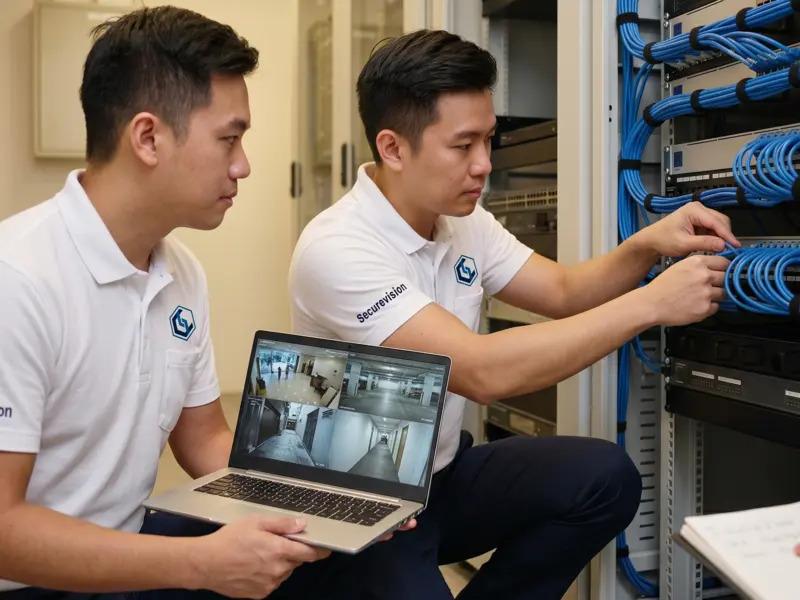
Because our systems run on IP infrastructure, we also handle the network layer; switches, structured cabling, and the backbone that everything else runs on. You engage one integrator for the full scope rather than coordinating between four.

  • Network Infrastructure: Omada and Ruijie managed switches; specified, supplied, and configured as part of the security installation.
  • Structured Cabling: Proper cable routing and termination, not afterthought runs. Done alongside the system install.
  • Single Point of Accountability: If anything stops working, you call us, not three separate vendors.
Integrated full security management
Operational Fit

Which Systems Suit Your Property?

Different property types have different security priorities. Here is how the six system groups typically map across the properties we serve.

Residential security Singapore

Residential

Bungalows, semi-detached, and terrace homes.

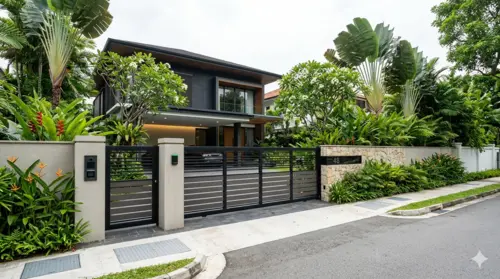
A typical landed home needs a burglar alarm for perimeter and interior detection, CCTV with motion-triggered recording covering the driveway, gates, and key entry points, a video intercom at the main gate, and auto-gate control for both the main and side gate. IP phones are optional but useful in larger homes where room-to-room or gate-to-house communication matters.

View Residential Solutions →
Condominium security Singapore

Condominiums

MCSTs, managing agents, and strata estates.

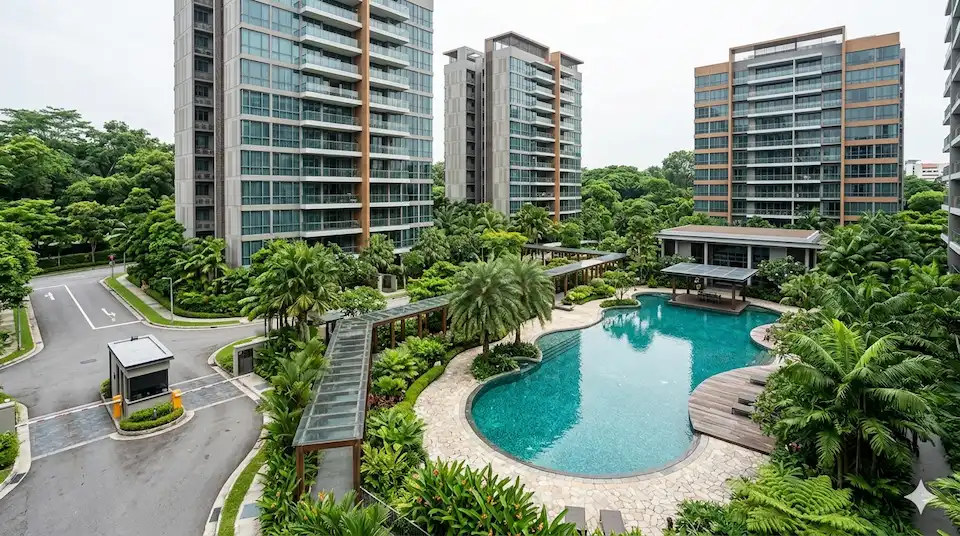
A condominium estate typically runs CCTV across the perimeter, car park, and all common areas, combined with a lobby intercom and resident access control at lifts and facilities. Car park management with barriers and LPR handles visitor vehicles and season parking. Private lift control restricts floor access to authorised residents only. Larger estates often layer in a platform like VESTA to consolidate operations across multiple guard posts.

View Condominium Solutions →
Commercial security Singapore

Commercial

Offices, hotels, retail shops, and commercial buildings.

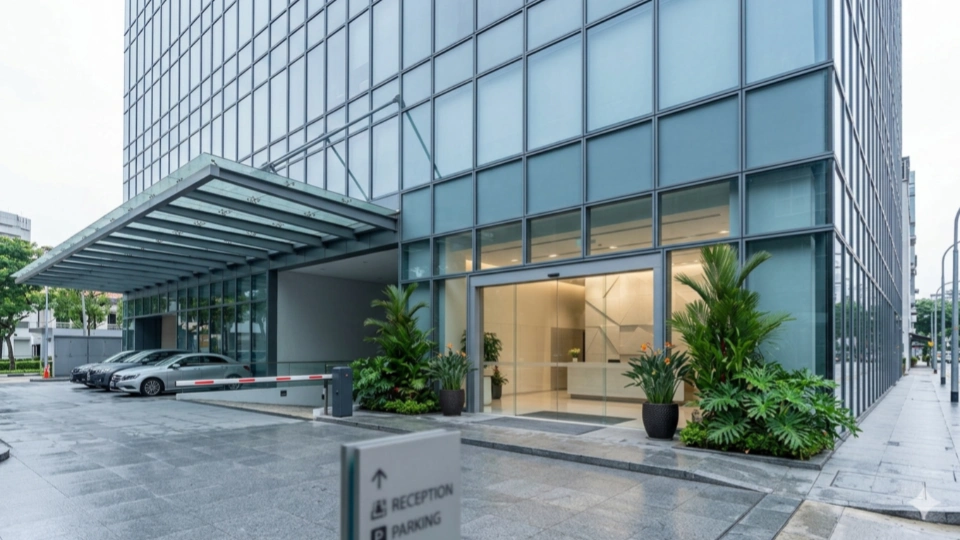
Commercial properties typically need CCTV across all floors and sensitive zones, combined with staff access control and visitor management at the lobby. Turnstiles manage pedestrian flow at the main entrance, while lift control restricts floor access. Car park management with LPR handles tenant and visitor vehicles. IP phones and a burglar alarm are standard across all offices.

View Commercial Solutions →
Industrial security Singapore

Industrial

Factories, warehouses, logistics hubs, and tech parks.

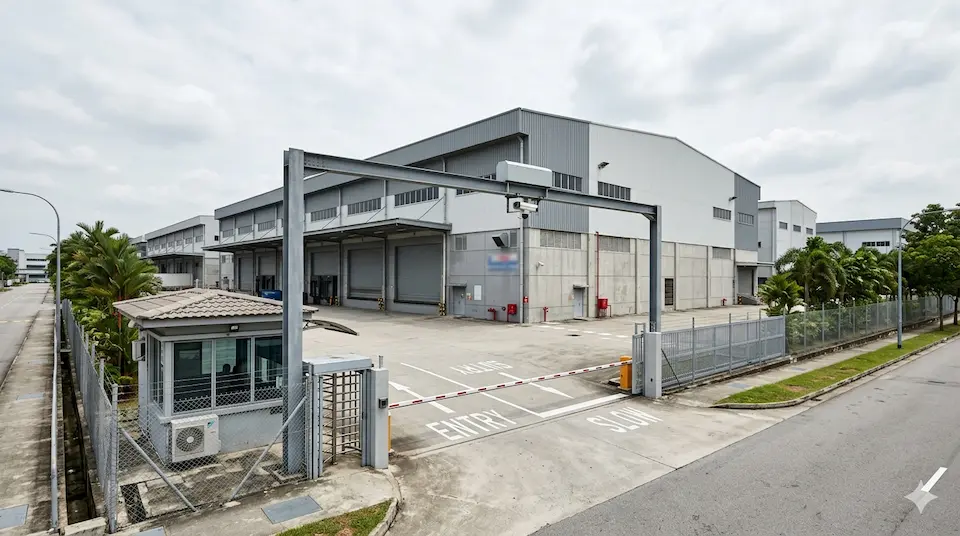
Industrial sites prioritise perimeter security and vehicle control: CCTV with wide-area coverage, auto-gates and barriers with LPR for delivery and staff vehicles, and zone-based access control with anti-passback. Turnstiles manage worker entry at the main gatehouse. Lift control restricts floor or mezzanine access by zone. Time and attendance tracking is standard for shift-based operations. A VMS platform ties the camera network together for large sites.

View Industrial Solutions →
Institutional security Singapore

Institutions

Schools, government offices, churches, and civic facilities.

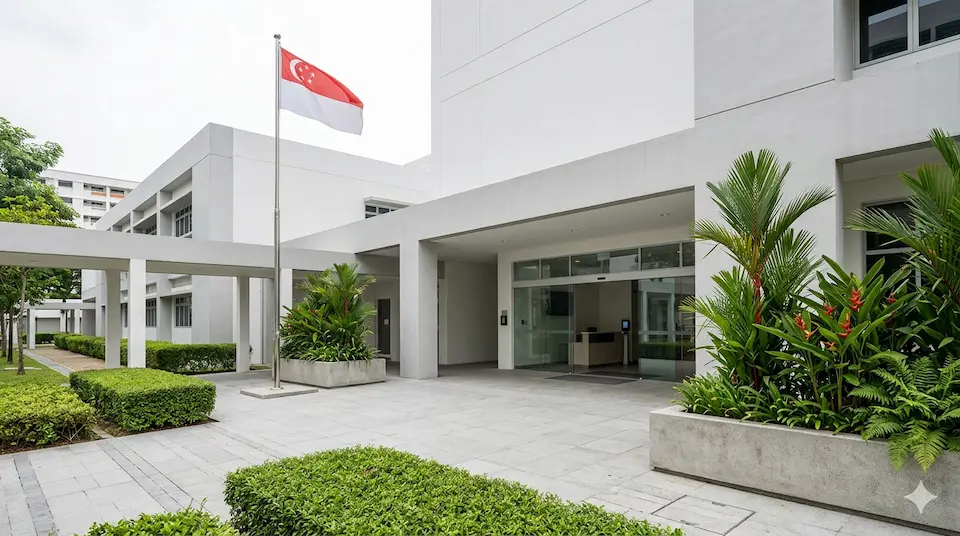
Schools and government buildings typically need access control at staff entrances with biometric verification, CCTV across the perimeter and internal corridors, and a visitor logging system at the reception. Car park management handles staff and visitor vehicles. A burglar alarm covers the premises after hours.

View Institution Solutions →
Healthcare security Singapore

Healthcare

Nursing homes, day care centres, and specialist care facilities.

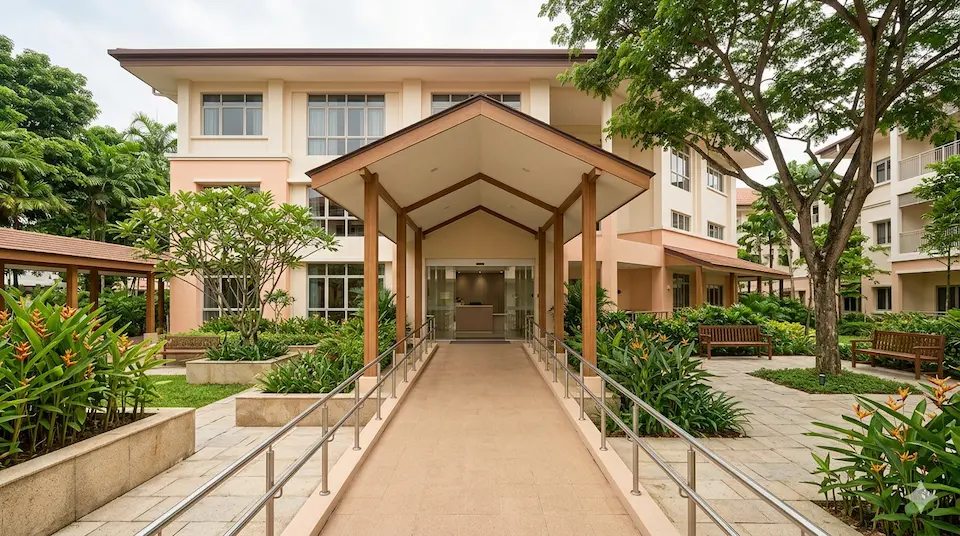
Healthcare facilities need strict zone control; access restricted by role across wards, medication rooms, and staff-only areas. CCTV runs 24 hours with incident logging. A video intercom manages visitor access at main entry. Anti-tailgate detection at sensitive entry points is standard. IP phones support internal communication across the facility.

View Healthcare Solutions →
Managed living security Singapore

Managed Living

Worker dormitories, co-living apartments, and managed hostels.

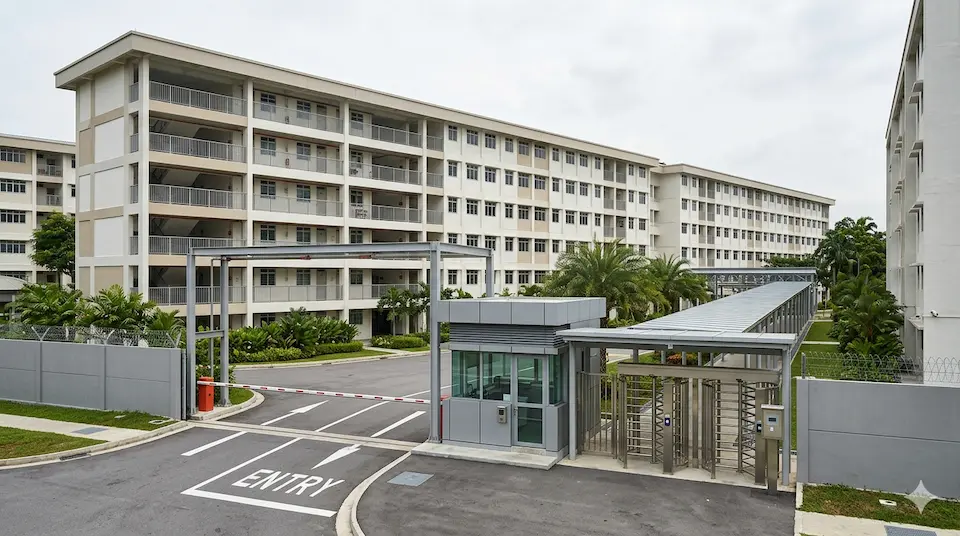
Dormitories and co-living properties need resident biometric access at all entry points, turnstiles at the main entrance to manage high foot traffic, CCTV across common areas, corridors, and the perimeter, and a vehicle management system for the car park. A platform layer helps operators manage high resident volumes and generate occupancy and incident reports.

View Managed Living Solutions →
Data centre security Singapore

Data Centres

Colocation, enterprise, and hyperscale data centre facilities.

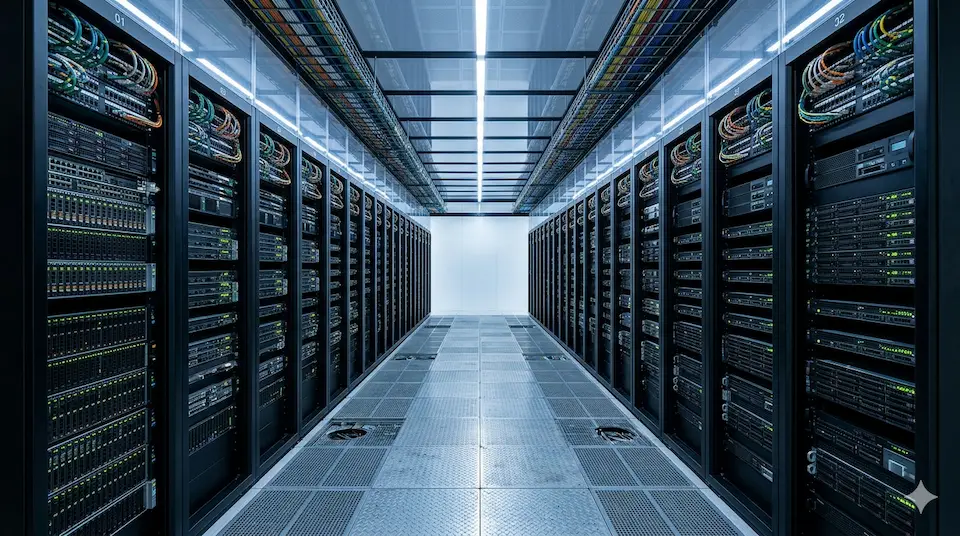
Data centres require multi-factor access control at every entry layer, from the building entrance down to individual cages and suites. CCTV is high-resolution and continuous. Vehicle access at the loading bay is controlled and logged. A full audit trail of every entry and exit event is non-negotiable for compliance.

View Data Centre Solutions →
The Management Layer

When One System Is Not Enough.

For operators managing complexity; multiple sites, high-traffic properties, or high-security requirements; a platform layer connects every system into one operational view.

VESTA

Securevision's own platform; purpose-built for condominiums. Resident management, visitor logs, guard patrol, and remote access in one interface.

Best for: Condominiums & gated estates

Milestone & HikCentral

Professional VMS platforms for complex, multi-camera, multi-site deployments. Full analytics, integrations, and comprehensive reporting.

Best for: Industrial, commercial, multi-site operators

ZKTeco CVSecurity

Unified security management platform that integrates access control, attendance, and video into a single operational dashboard.

Best for: Offices with integrated HR and access needs

Platform software is recommended based on your property type and operational complexity, not sold as a default add-on. We will specify the right platform during the site assessment.
Our Process

Design First. Install Second.

Most security problems are specification problems; the wrong system for the site, installed without a clear architecture. We fix that upstream.

1

Site Assessment

We walk your property, identify risk zones, and map every entry point before specifying a single device.

2

System Design

A full architecture document showing which systems, which brands, and how everything connects.

3

Installation

Hardware, cabling, networking, and software commissioned by our own engineers, not subcontracted.

4

Maintenance

Annual service contracts, warranty management, and a direct support line to the team that built your system.

Our Process

How We Design and Install Security Systems in Singapore

Every engagement follows the same five-step sequence. No property is quoted without being assessed first; because systems specified without site knowledge rarely perform as intended.

  1. Site Assessment

    We visit your property and assess it against your security objectives; entry points, blind spots, existing infrastructure, cable routing, and operational constraints. This is where the design begins.

  2. System Design

    We produce a written design covering the systems recommended, equipment specified, installation scope, and integration points between systems. You receive a clear rationale, not a line-item quote without context.

  3. Professional Installation

    All work is carried out by our own technicians, not subcontracted. We are Police Licensed (Licence No. ) and BCA Registered. Cable management, commissioning, and testing are completed before handover.

  4. Handover & Training

    We walk through every system with the person responsible for operating it; how to use it, how to manage users, and how to interpret alerts. Documentation is provided.

  5. Ongoing Support

    We remain your point of contact after installation. Maintenance contracts are available for annual servicing and priority response. Systems we install are systems we support.

Who We Work With

  • Property owners; residential, commercial, and industrial
  • MCSTs and Managing Agents; condominium and estate security upgrades
  • Facilities and operations managers; commercial and industrial site security
  • Architects and ID firms; security specification for new developments and renovations
  • Security contractors; technology integration alongside guarding operations

Licences & Credentials

  • Police Licence No.
  • bizSAFE Level 3
  • BCA Registered Contractor
  • Established 2006 · sites protected across Singapore
Common Questions

Frequently Asked Questions

Questions we hear from property managers, facilities teams, and owners evaluating a security system upgrade.

What is the difference between a security system and a security solution?

A security system is the technology; cameras, access readers, intercoms, barriers, and the software that connects them. A security solution is the design of those systems around the specific operational requirements of a property type. The same CCTV camera can be part of a condominium estate security solution, a factory safety compliance solution, or a dormitory occupancy accountability solution; the hardware may look similar, but the camera positions, analytics configuration, access policies, and management workflow are designed differently for each environment.

Do I need all six system groups?

No. Most properties use three or four of the six groups, depending on their operational requirements. A residential home typically needs CCTV, a burglar alarm, a video intercom, and an auto-gate. A large condominium estate typically uses all six. We specify only the groups that address the property's specific operational needs, not all six by default.

Can existing security systems be integrated with new ones?

Often yes, depending on the age and type of the existing hardware. IP cameras in adequate condition and compatible with the new NVR or VMS platform can typically be retained. Structured cabling and managed network switches in serviceable condition can be reused. Analogue CCTV cameras and DVR recorders cannot integrate with modern IP platforms and must be replaced. We assess existing infrastructure during the site survey before agreeing any scope.

Can Securevision support security systems installed by another vendor?

Yes, subject to the system type and the availability of access to the configuration. For systems on compatible platforms: Hikvision, Milestone, HikCentral, ZKTeco; we can take over maintenance and support. For systems on proprietary platforms with restricted access, we assess feasibility during the initial review. We do not refuse to support systems we did not install, but we will be honest about what level of support is practical before committing.

Which system group is most important for my property type?

It depends on the primary operational risk and compliance obligation. For residential and condominium properties, premises security and entry and access are the starting point. For industrial and logistics properties, vehicle management and zone-based access control are typically the highest priorities. For managed living and healthcare, the management platform layer is critical because compliance reporting requires searchable, exportable records. The Operational Fit section on this page maps the six system groups to each property type.

What happens during a site assessment?

A site assessment is a walkthrough of the property with the facilities team, typically 60 to 90 minutes for a standard commercial or residential site, longer for large industrial or managed living properties. We review existing infrastructure, identify coverage gaps, map every access point, and discuss the operational priorities. The assessment is the information-gathering step that allows us to design a system that fits the property rather than a standard package. There is no obligation following an assessment.

Can a security system be installed and expanded in phases?

Yes; phased installation is standard practice for properties where budget, operational constraints, or construction sequencing require a staged approach. We design the Phase 1 scope so that it delivers a functioning, complete system for the areas and use cases it covers, not a partial installation waiting for Phase 2. Cabling and network infrastructure for later phases is typically installed during Phase 1 to minimise future disruption and reduce the total cost of subsequent phases.

Ready to Secure Your Property?

Tell us about your site. We will assess it and design a system that works as one.

Licensed by the Police Force: Licence · Serving Singapore since 2006